Subscribe for our latest news, straight to your inbox:
Thank you! Your submission has been received!
Oops! Something went wrong while submitting the form.
Share this post
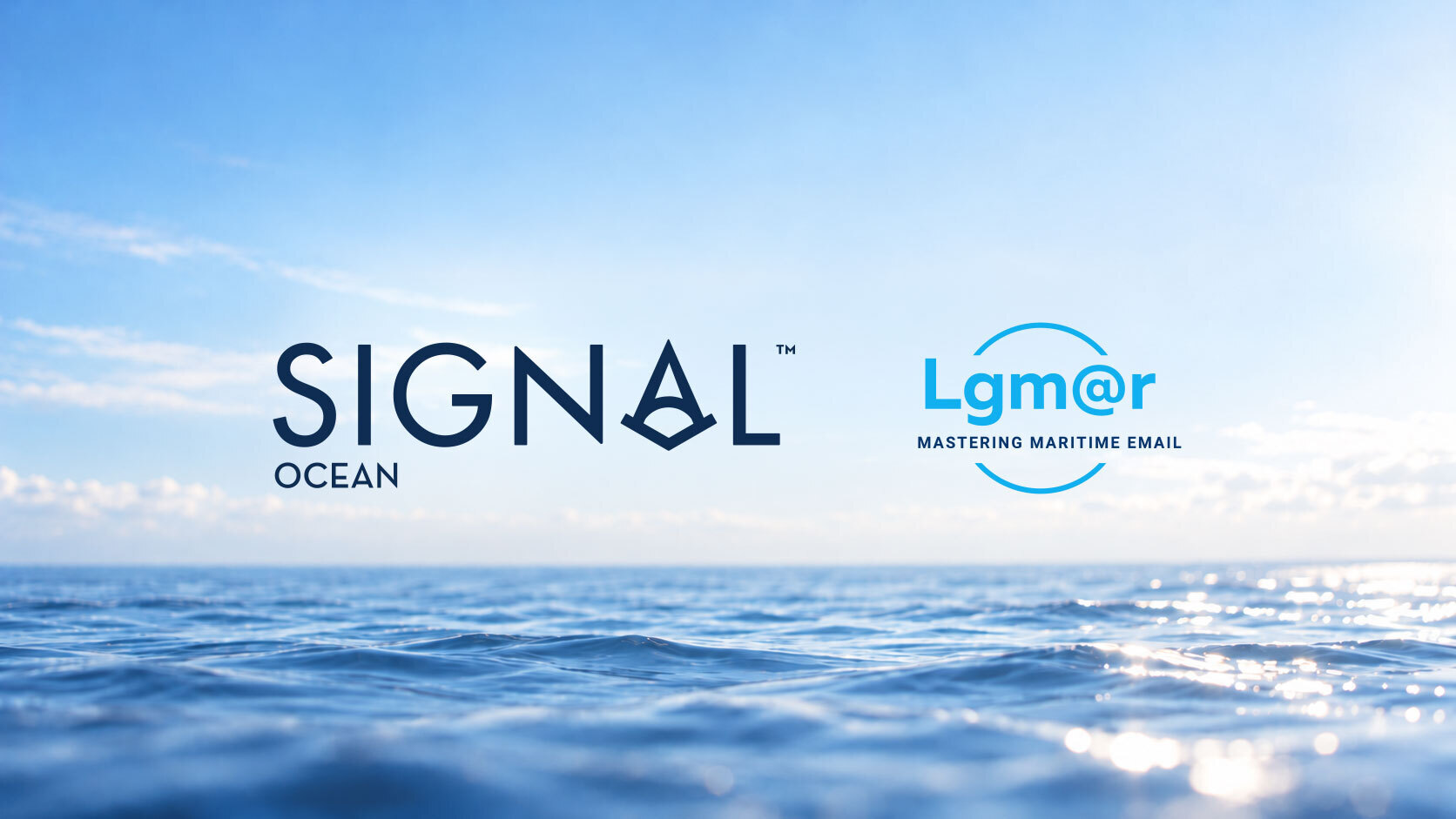
ATHENS, 15 October 2026. Signal Ocean announced today the acquisition of Lgmar, the Athens-based company behind Telix, a maritime email and communication platform in daily use across the shipping community since 1989.
The acquisition is the latest step in Signal Ocean’s commitment to extend its offerings from market intelligence into the communication workflows where fixtures, operations and post-fixing actually take place.
Signal Ocean's technology, data and AI capabilities combined with Lgmar’s expertise, will provide a transformative service to the industry.
Ioannis Martinos, CEO of Signal Ocean said “email is an important part of the shipping workflow. Lgmar has spent 37 years earning the trust of this market by getting the details right - the things that matter if you work in shipping. That understanding is what we are bringing into Signal, and the immediate priority for clients of both companies is continuity.”
Email remains a core working tool of the shipping industry, and the point where market data, counterparties and decisions meet. Signal's investment in maritime communication reflects its conviction that shipping technology needs to meet the industry where the shipping work is being done.
"We built Telix by listening to shipping people and solving the problems they faced," said Helen Skourtis, Managing Director of Lgmar. "What mattered in choosing our next step was finding a home that understands that."
"Signal is a company born inside this industry that values the same things we do; the product, the team, and the clients who have stood by us for decades. One of the main qualities Signal holds is thinking ahead of the industry, while having the technical depth to back it up.”
The acquisition deepens Signal Ocean's investment in the daily working tools of commercial shipping, while advancing a longer-held conviction: that the intelligence behind a decision and the place it is taken belong in the same system.
About Signal Ocean - Signal Ocean is the technology arm of The Signal Group and the creator of the Signal Ocean Platform. The platform enables charterers, brokers, and shipowners to securely process, combine, and analyze a complex array of private and public data on shipping and commodities. Powered by a rich set of machine learning and artificial intelligence technologies, Signal Ocean processes available data to deliver customized, exclusive insights for smarter, faster, and more informed decision-making. Founded in 2014, the company is headquartered in London with offices in Athens, Singapore, Paris, Sofia and Hamburg. In 2026, Signal Ocean acquired AXSMarine and Alphaliner. The Signal Group is a diversified shipping services organization supported by a world-class mix of commercial shipping professionals, product managers, data scientists, and engineers. The wider group operates Signal Maritime Services, which combines best-in-class commercial ship management with in-anger use of advanced analytics to run a leading Aframax tanker pool, and Signal Ventures, a strategic investment arm focused on incubating, accelerating and investing in next-generation shipping software and technology.
About Lgmar - Lgmar is a software company developing highly specialized email and communication products for the shipping industry, by a team of dedicated experts in computer science and maritime business. LgMAR, founded in 1989 and based out of Athens, Greece, serves several hundreds of clients and thousands of users mainly in Greece, as well as in a number of other world regions. Their products are being used by most of shipping personas, including ship owners, ship managers, ship brokers, ship agents, operators, banks, insurance brokers and manning agents.
Creating a sustainable world requires us to embark on a journey towards a zero emission future, where every step is a commitment to preserve our planet for future generations.
Albert Greenway
Environmental Scientist, Sustainability Expert
No items found.
Increased Use of Renewable Energy:
Shipping companies are embracing renewable energy sources to power onboard systems and reduce emissions during port operations. Solar panels and wind turbines are being installed on vessels to generate clean energy, reducing reliance on auxiliary engines, and cutting down emissions. Shore power facilities in ports allow ships to connect to the electrical grid, eliminating the need for onboard generators while docked.
Collaboration and Industry Partnerships:
Recognizing that addressing emissions requires collective action, shipping companies, governments, and organizations have formed partnerships and collaborations. These initiatives focus on research and development, sharing best practices, and promoting knowledge transfer. Joint projects aim to develop and deploy innovative technologies, improve infrastructure, and create a supportive regulatory framework to accelerate the industry's transition towards a greener future. The Zero Emission Shipping - Mission Innovation.
To pave the way for a greener future in shipping, the availability of alternative fuels plays a vital role in their widespread adoption. However, this availability is influenced by factors such as port infrastructure, local regulations, and government policies. As the demand for cleaner fuels in shipping rises and environmental regulations become more stringent, efforts are underway to improve the accessibility of these fuels through infrastructure development, collaborations, and investments in production facilities.
Liquefied Natural Gas (LNG) infrastructure has seen significant growth in recent years, resulting in more LNG bunkering facilities and LNG-powered vessels. Nonetheless, the availability of LNG as a marine fuel can still vary depending on the region. To ensure consistent availability worldwide, there is a need for further development of LNG supply chains and infrastructure. For biofuels, their availability hinges on production capacity and the availability of feedstock. Although biofuels are being produced and utilized in various sectors, their availability as a marine fuel remains limited. Scaling up biofuel production and establishing robust supply chains are imperative to ensure wider availability within the shipping industry.Hydrogen, as a fuel for maritime applications, is still in the early stages of infrastructure development. While some hydrogen vessels have been tested or introduced in the first quarter of last year, the infrastructure required for hydrogen production and distribution needs further advancement.
Ammonia, as a marine fuel, currently faces limitations in availability. The production, storage, and handling infrastructure for ammonia need further development to support its widespread use in the shipping industry.Methanol, on the other hand, is already a commercially available fuel and has been used as a blend with conventional fuels in some ships. However, its availability as a standalone marine fuel can still be limited in certain regions. Bureau Veritas in October 2022 published a White Paper for the Alternative Fuels Outlook. This white paper provides a comprehensive overview of alternative fuels for the shipping industry, taking into account key factors such as technological maturity, availability, safety, emissions, and regulations.
Creating a sustainable world requires us to embark on a journey towards a zero emission future, where every step is a commitment to preserve our planet for future generations.
Albert Greenway
Environmental Scientist, Sustainability Expert
Increased Use of Renewable Energy:
Shipping companies are embracing renewable energy sources to power onboard systems and reduce emissions during port operations. Solar panels and wind turbines are being installed on vessels to generate clean energy, reducing reliance on auxiliary engines, and cutting down emissions. Shore power facilities in ports allow ships to connect to the electrical grid, eliminating the need for onboard generators while docked.
Collaboration and Industry Partnerships:
Recognizing that addressing emissions requires collective action, shipping companies, governments, and organizations have formed partnerships and collaborations. These initiatives focus on research and development, sharing best practices, and promoting knowledge transfer. Joint projects aim to develop and deploy innovative technologies, improve infrastructure, and create a supportive regulatory framework to accelerate the industry's transition towards a greener future. The Zero Emission Shipping - Mission Innovation.
To pave the way for a greener future in shipping, the availability of alternative fuels plays a vital role in their widespread adoption. However, this availability is influenced by factors such as port infrastructure, local regulations, and government policies. As the demand for cleaner fuels in shipping rises and environmental regulations become more stringent, efforts are underway to improve the accessibility of these fuels through infrastructure development, collaborations, and investments in production facilities.
Liquefied Natural Gas (LNG) infrastructure has seen significant growth in recent years, resulting in more LNG bunkering facilities and LNG-powered vessels. Nonetheless, the availability of LNG as a marine fuel can still vary depending on the region. To ensure consistent availability worldwide, there is a need for further development of LNG supply chains and infrastructure. For biofuels, their availability hinges on production capacity and the availability of feedstock. Although biofuels are being produced and utilized in various sectors, their availability as a marine fuel remains limited. Scaling up biofuel production and establishing robust supply chains are imperative to ensure wider availability within the shipping industry.Hydrogen, as a fuel for maritime applications, is still in the early stages of infrastructure development. While some hydrogen vessels have been tested or introduced in the first quarter of last year, the infrastructure required for hydrogen production and distribution needs further advancement.
Ammonia, as a marine fuel, currently faces limitations in availability. The production, storage, and handling infrastructure for ammonia need further development to support its widespread use in the shipping industry.Methanol, on the other hand, is already a commercially available fuel and has been used as a blend with conventional fuels in some ships. However, its availability as a standalone marine fuel can still be limited in certain regions. Bureau Veritas in October 2022 published a White Paper for the Alternative Fuels Outlook. This white paper provides a comprehensive overview of alternative fuels for the shipping industry, taking into account key factors such as technological maturity, availability, safety, emissions, and regulations.

.webp)




.png)