Stay up to date on the latest insight about maritime trade
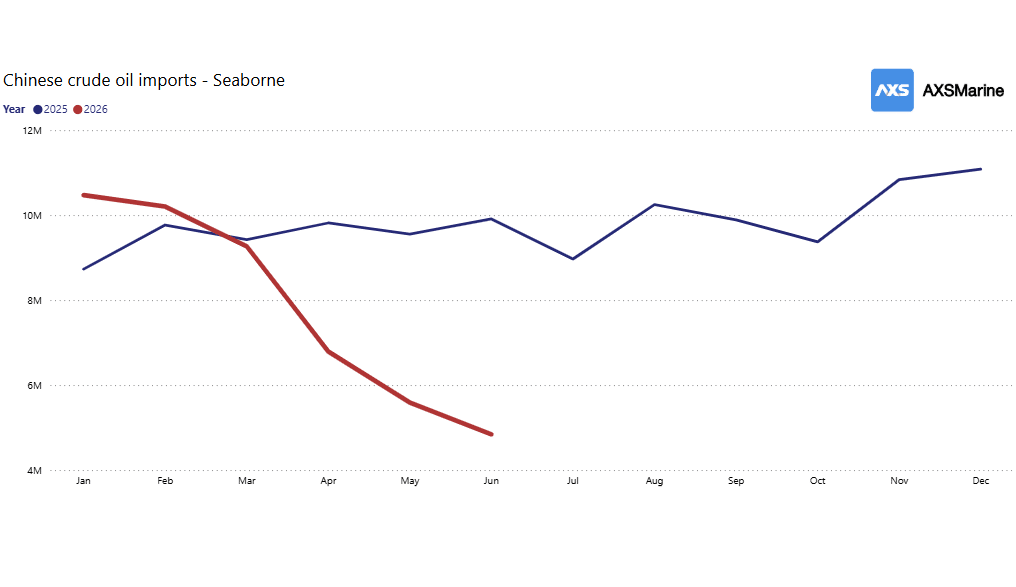
Imports fell nearly a third year-on-year, but the balance sheet tells a different story — China was building stock, not losing demand. Here's what the data actually shows.
Imports fell nearly a third year-on-year, but the balance sheet tells a different story — China was building stock, not losing demand. Here's what the data actually shows.



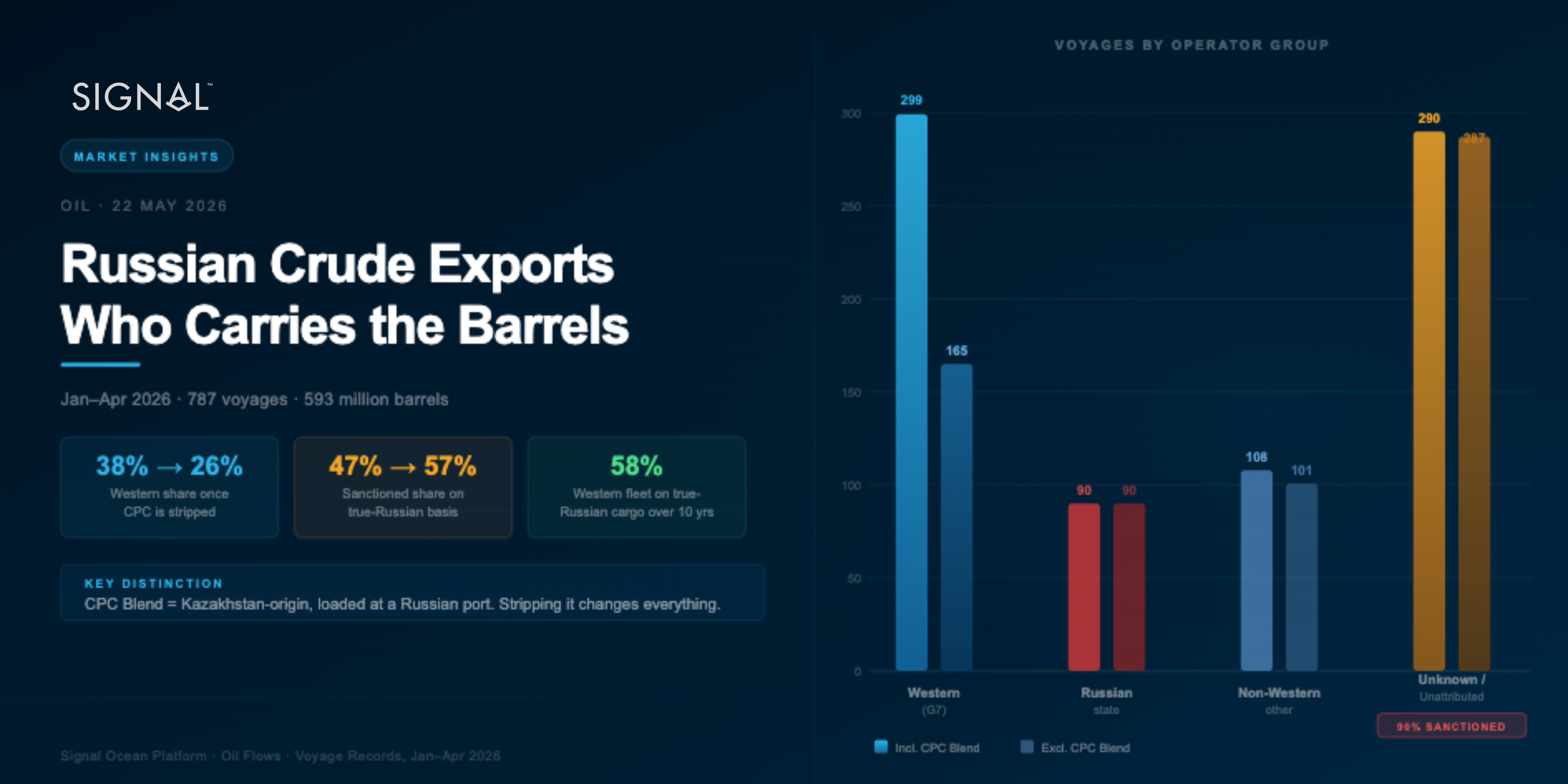
Over the first four months of 2026, the Signal Ocean Platform recorded 787 crude voyages lifted from Russian ports, totalling approximately 593 million barrels. This insight goes a layer deeper than the dashboard view above: using the underlying voyage records, it examines who is commercially operating the tonnage. It isolates the share of voyages that carry Kazakhstan-origin CPC Blend rather than true Russian-origin crude.
Over the first four months of 2026, the Signal Ocean Platform recorded 787 crude voyages lifted from Russian ports, totalling approximately 593 million barrels. This insight goes a layer deeper than the dashboard view above: using the underlying voyage records, it examines who is commercially operating the tonnage. It isolates the share of voyages that carry Kazakhstan-origin CPC Blend rather than true Russian-origin crude.
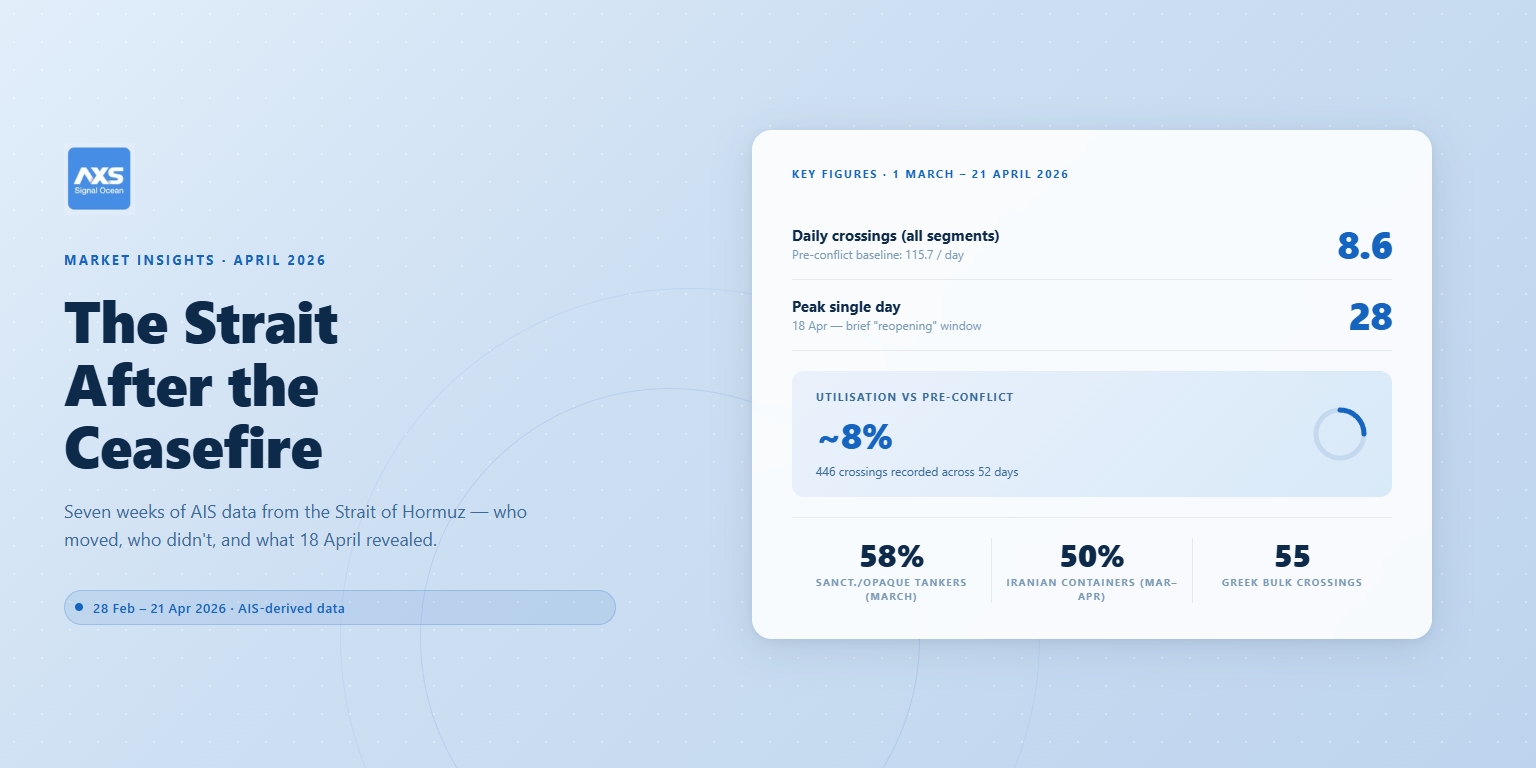
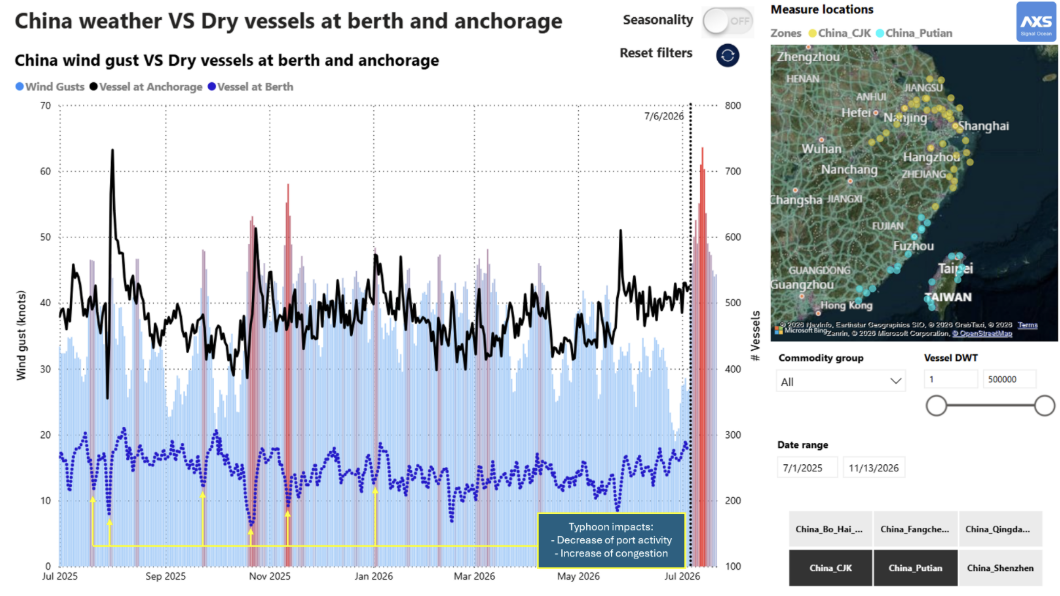
When we published When the Gulf Went Still in early April, the defining feature of the Strait of Hormuz was absence. Crossings had collapsed to near zero in the first days of March. The 353 dry bulk and multipurpose vessels confirmed inside the Gulf by 5 March had nowhere to go. Seven weeks of continuous AIS tracking later, traffic has not recovered in any meaningful sense. What has emerged instead is a stratified corridor: thin, defined less by commercial logic than by risk tolerance, flag of convenience, and proximity to the sanctioned fleet.
When we published When the Gulf Went Still in early April, the defining feature of the Strait of Hormuz was absence. Crossings had collapsed to near zero in the first days of March. The 353 dry bulk and multipurpose vessels confirmed inside the Gulf by 5 March had nowhere to go. Seven weeks of continuous AIS tracking later, traffic has not recovered in any meaningful sense. What has emerged instead is a stratified corridor: thin, defined less by commercial logic than by risk tolerance, flag of convenience, and proximity to the sanctioned fleet.
.webp)