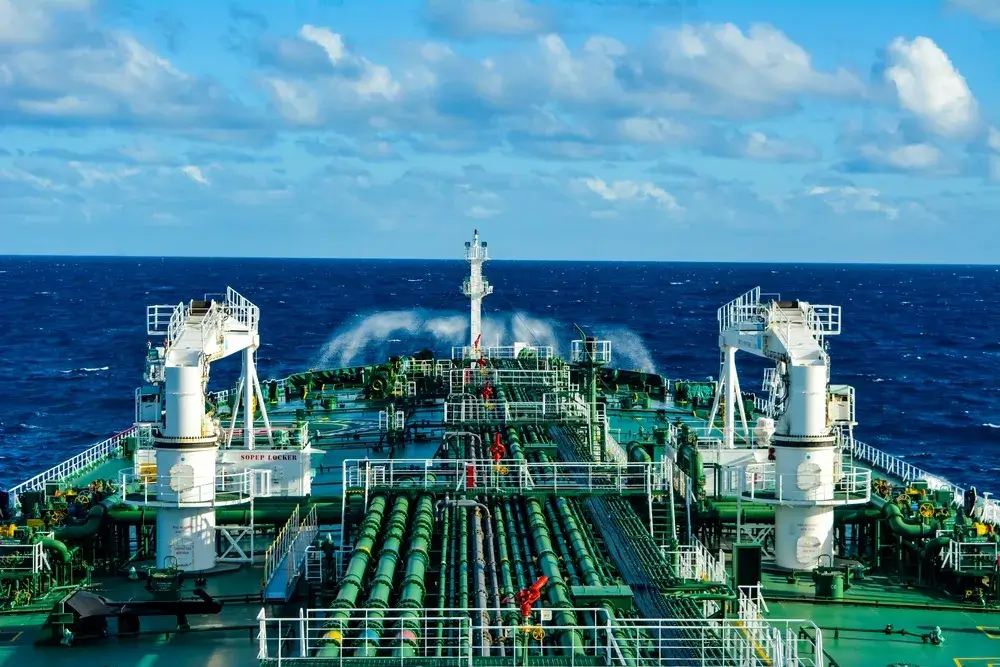
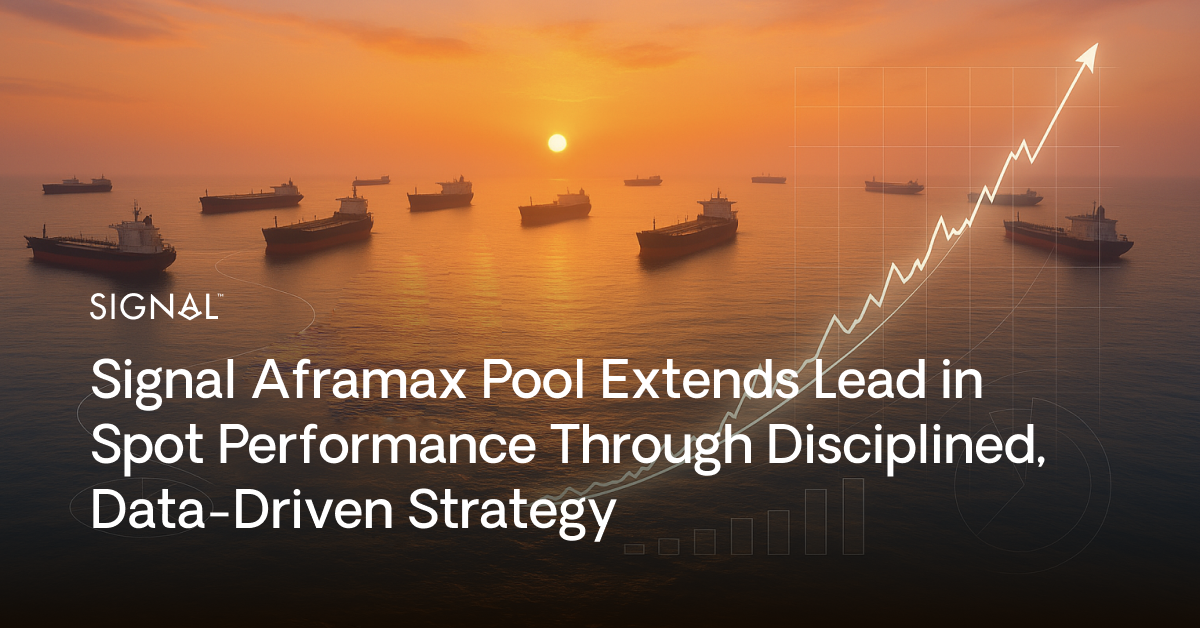
Signal Aframax Pool: Superior spot results with human-centric service
As we step into the new year, the Signal Aframax Pool continues to evolve, guided not only by performance but by the strength and quality of the partnerships behind it. Building on the strong momentum developed throughout 2025, we are encouraged to see the Pool maintain a leading spot performance, supported by a growing fleet and a continued focus on understanding and serving our partners’ individual needs.
Consistent Performance
The results reported in mid-2025 were not a one-off outcome, but the product of a steady and disciplined commercial approach. By remaining patient during quieter periods and acting decisively when the market presents opportunities, the Signal Aframax Pool has delivered consistent outperformance versus the spot market and peers. For the full year 2025, the Pool achieved a net TCE of $34.5k/day, exceeding its peers by approximately $3.8k/day.
A data-driven framework allows us to manage opportunity cost carefully across market cycles. We avoid locking in discounted fronthauls in weaker markets, focusing instead on thoughtful positioning. When rates improve, the fleet is well placed to capture higher-value voyages, while in softer markets, when opportunity cost is lower, we prioritize backhauls and repositioning toward stronger earning regions. This measured approach has helped deliver consistent outcomes over time, supported by robust systems, experienced teams, and long-standing relationships.
While performance is fundamental, we believe the real value of the Pool lies in how we work with our partners. Our priority is to build alignment by understanding each partner’s objectives and constraints. This is particularly important around technical requirements such as dry dockings or repositioning. Through early planning and open communication, we aim to reduce commercial disruption and, where possible, create additional value. This way of working reflects a broader culture of transparency, empathy, and people-centred service.
Flexibility Without Complexity
In a market defined by volatility, flexibility matters. Over the past year, we have further simplified our operational framework to make participation in the Pool more straightforward. Entry and exit processes have been streamlined to reduce friction, allowing partners to retain control and optionality while benefiting from a structure designed to support commercial agility.
A Shared Stake in Success
The market response to this balance of performance and partnership has been encouraging. We are pleased to welcome three additional vessels into the Signal Aframax Pool, reflecting growing confidence in our commercial management approach.
Alongside organic growth, we continue to explore selective strategic opportunities that strengthen our broader platform. This includes a recent investment in Bluepool, a fast-growing dry bulk pool, as well as ongoing work on a structure to scale Aframax time charter investments. These initiatives are intended to expand our capabilities while remaining focused on delivering long-term value to our partners.
Looking ahead, Signal remains committed to a simple promise: to pursue strong, sustainable results while offering a partner experience grounded in collaboration, transparency, and respect.

Creating a sustainable world requires us to embark on a journey towards a zero emission future, where every step is a commitment to preserve our planet for future generations.
Albert Greenway
Environmental Scientist, Sustainability Expert
Increased Use of Renewable Energy:
Shipping companies are embracing renewable energy sources to power onboard systems and reduce emissions during port operations. Solar panels and wind turbines are being installed on vessels to generate clean energy, reducing reliance on auxiliary engines, and cutting down emissions. Shore power facilities in ports allow ships to connect to the electrical grid, eliminating the need for onboard generators while docked.
Collaboration and Industry Partnerships:
Recognizing that addressing emissions requires collective action, shipping companies, governments, and organizations have formed partnerships and collaborations. These initiatives focus on research and development, sharing best practices, and promoting knowledge transfer. Joint projects aim to develop and deploy innovative technologies, improve infrastructure, and create a supportive regulatory framework to accelerate the industry's transition towards a greener future. The Zero Emission Shipping - Mission Innovation.
To pave the way for a greener future in shipping, the availability of alternative fuels plays a vital role in their widespread adoption. However, this availability is influenced by factors such as port infrastructure, local regulations, and government policies. As the demand for cleaner fuels in shipping rises and environmental regulations become more stringent, efforts are underway to improve the accessibility of these fuels through infrastructure development, collaborations, and investments in production facilities.
Liquefied Natural Gas (LNG) infrastructure has seen significant growth in recent years, resulting in more LNG bunkering facilities and LNG-powered vessels. Nonetheless, the availability of LNG as a marine fuel can still vary depending on the region. To ensure consistent availability worldwide, there is a need for further development of LNG supply chains and infrastructure. For biofuels, their availability hinges on production capacity and the availability of feedstock. Although biofuels are being produced and utilized in various sectors, their availability as a marine fuel remains limited. Scaling up biofuel production and establishing robust supply chains are imperative to ensure wider availability within the shipping industry.Hydrogen, as a fuel for maritime applications, is still in the early stages of infrastructure development. While some hydrogen vessels have been tested or introduced in the first quarter of last year, the infrastructure required for hydrogen production and distribution needs further advancement.
Ammonia, as a marine fuel, currently faces limitations in availability. The production, storage, and handling infrastructure for ammonia need further development to support its widespread use in the shipping industry.Methanol, on the other hand, is already a commercially available fuel and has been used as a blend with conventional fuels in some ships. However, its availability as a standalone marine fuel can still be limited in certain regions. Bureau Veritas in October 2022 published a White Paper for the Alternative Fuels Outlook. This white paper provides a comprehensive overview of alternative fuels for the shipping industry, taking into account key factors such as technological maturity, availability, safety, emissions, and regulations.

Creating a sustainable world requires us to embark on a journey towards a zero emission future, where every step is a commitment to preserve our planet for future generations.
Albert Greenway
Environmental Scientist, Sustainability Expert
Increased Use of Renewable Energy:
Shipping companies are embracing renewable energy sources to power onboard systems and reduce emissions during port operations. Solar panels and wind turbines are being installed on vessels to generate clean energy, reducing reliance on auxiliary engines, and cutting down emissions. Shore power facilities in ports allow ships to connect to the electrical grid, eliminating the need for onboard generators while docked.
Collaboration and Industry Partnerships:
Recognizing that addressing emissions requires collective action, shipping companies, governments, and organizations have formed partnerships and collaborations. These initiatives focus on research and development, sharing best practices, and promoting knowledge transfer. Joint projects aim to develop and deploy innovative technologies, improve infrastructure, and create a supportive regulatory framework to accelerate the industry's transition towards a greener future. The Zero Emission Shipping - Mission Innovation.
To pave the way for a greener future in shipping, the availability of alternative fuels plays a vital role in their widespread adoption. However, this availability is influenced by factors such as port infrastructure, local regulations, and government policies. As the demand for cleaner fuels in shipping rises and environmental regulations become more stringent, efforts are underway to improve the accessibility of these fuels through infrastructure development, collaborations, and investments in production facilities.
Liquefied Natural Gas (LNG) infrastructure has seen significant growth in recent years, resulting in more LNG bunkering facilities and LNG-powered vessels. Nonetheless, the availability of LNG as a marine fuel can still vary depending on the region. To ensure consistent availability worldwide, there is a need for further development of LNG supply chains and infrastructure. For biofuels, their availability hinges on production capacity and the availability of feedstock. Although biofuels are being produced and utilized in various sectors, their availability as a marine fuel remains limited. Scaling up biofuel production and establishing robust supply chains are imperative to ensure wider availability within the shipping industry.Hydrogen, as a fuel for maritime applications, is still in the early stages of infrastructure development. While some hydrogen vessels have been tested or introduced in the first quarter of last year, the infrastructure required for hydrogen production and distribution needs further advancement.
Ammonia, as a marine fuel, currently faces limitations in availability. The production, storage, and handling infrastructure for ammonia need further development to support its widespread use in the shipping industry.Methanol, on the other hand, is already a commercially available fuel and has been used as a blend with conventional fuels in some ships. However, its availability as a standalone marine fuel can still be limited in certain regions. Bureau Veritas in October 2022 published a White Paper for the Alternative Fuels Outlook. This white paper provides a comprehensive overview of alternative fuels for the shipping industry, taking into account key factors such as technological maturity, availability, safety, emissions, and regulations.

.webp)









.png)









.png)


.png)

.png)

.png)


.png)


.avif)



.avif)