.webp)

Bunker Procurement Optimization: How Maritime Intelligence Platforms Help Shipping Companies Cut Fuel Costs


drives these stories

What Is Bunker Procurement?
Bunker procurement is the process of purchasing and loading marine fuel onto vessels—a deceptively simple definition for what represents shipping's largest operational expense. Fuel costs typically account for 40-60% of a vessel's voyage operating costs, making procurement decisions critical to profitability.
The procurement process involves selecting fuel grades, choosing suppliers, timing purchases to market conditions, and coordinating physical delivery at specific ports. Commercial managers must balance price optimization with operational requirements like vessel schedules, port availability, and fuel quality standards.
Modern bunker procurement extends beyond basic fuel purchasing to include compliance with emissions regulations like FuelEU and EU ETS, supplier risk assessment, and integration with voyage optimization systems. The complexity has grown substantially as regulatory requirements tie fuel procurement decisions directly to emissions accounting and carbon cost calculations.
Key Challenges in Bunker Cost Optimization
Ship operators face four critical obstacles that transform bunker procurement from routine refueling into strategic cost management. These challenges drive the adoption of specialized platforms and intelligence systems across the maritime industry.
Price Volatility
Marine fuel prices swing 20-30% within a single quarter, turning procurement timing into a make-or-break decision. A large container vessel burning 200 tons per day can see daily fuel costs fluctuate by $20,000-30,000 based purely on market timing. Operators without real-time price intelligence routinely overpay by 5-15% per bunker stem.
Supplier Selection and Fuel Quality
Supplier reliability directly impacts vessel performance and regulatory compliance risk. Poor fuel quality can reduce engine efficiency by 3-8% and trigger costly engine maintenance, while unreliable suppliers create schedule delays that cascade into demurrage charges. Procurement teams must balance price competitiveness against operational risk across hundreds of global ports.
Regulatory Compliance
FuelEU Maritime, EU ETS, and IMO CII requirements now tie fuel procurement decisions to emissions accounting and carbon pricing. Each bunker purchase must consider not just immediate fuel costs but future carbon compliance costs and greenhouse gas intensity penalties. Wrong fuel choices can trigger regulatory penalties exceeding the original fuel savings.
Refinery Outages and Supply Disruptions
Regional supply disruptions create sudden port-level price spikes that catch unprepared operators. A major refinery outage can drive bunker prices up 15-25% within days across entire regions. Procurement teams without early-warning systems routinely bunker into these price spikes, adding unnecessary costs to every affected voyage.
Platform Types: Procurement Execution vs. Market Intelligence
Bunker procurement tools split into two distinct layers. Procurement execution platforms handle the transaction workflow — supplier enquiries, price comparisons, contracts, and payment processing. Maritime intelligence platforms sit upstream, providing market data that informs when and where to bunker before any transaction begins.
Dedicated Bunker Procurement Platforms
ZeroNorth Bunker leads the execution category with end-to-end enquiry management, procurement-to-payment workflows, and integrated FuelEU compliance tracking. Veson IMOS dominates commercial management for dry bulk operators, handling voyage execution and contract management across 38,000 users globally. ENGINE operates as a marketplace connecting buyers and sellers for spot transactions and price discovery. StormGeo s-Insight combines weather routing with fuel planning for operators who want integrated voyage optimization.
These platforms excel at transaction execution but require market intelligence inputs to optimize timing decisions.
Maritime Intelligence Platforms
Signal Ocean operates as the decision-support layer that precedes procurement execution. Rather than handling transactions, it provides vessel tracking data for port call timing, refinery outage monitoring for supply disruption signals, European natural gas price feeds for alternative fuel analysis, and freight rate context for commercial modeling. This intelligence answers the "when and where" questions before procurement platforms handle the "how" of transaction execution.
The two platform types complement rather than compete — intelligence platforms inform the decisions that procurement platforms execute.
Platform Comparison Table
Different platforms serve distinct roles in the bunker procurement workflow. Execution platforms handle transactions, enquiries, and supplier management. Intelligence platforms provide the market data that informs procurement timing and port selection decisions.
The key distinction: execution platforms handle the transaction itself, while intelligence platforms inform the strategic decisions that precede procurement. Signal Ocean operates upstream in this workflow, providing the market context that procurement teams need before engaging with suppliers through platforms like ZeroNorth or ENGINE.
Best For: Quick-Reference Categories
Best for fleet-wide procurement execution: ZeroNorth Bunker handles enquiry-to-payment workflows, voyage integration, and FuelEU compliance reporting for operations teams managing multiple vessels.
Best for commercial contract management: Veson Nautical IMOS excels at dry bulk contract management, voyage execution, and commercial analytics for freight operators.
Best for spot price discovery and supplier comparison: ENGINE connects buyers directly with suppliers through marketplace transactions and real-time price discovery tools.
Best for combined weather routing and fuel planning: StormGeo s-Insight integrates weather optimization with bunker planning for operators prioritizing route efficiency.
Best for bunkering market intelligence and cost forecasting: Signal Ocean provides vessel tracking, refinery outage monitoring, and European natural gas price data that inform optimal timing and port selection decisions.
Signal Ocean provides four intelligence capabilities that inform optimal bunker procurement timing and port selection, operating upstream of transaction execution platforms.
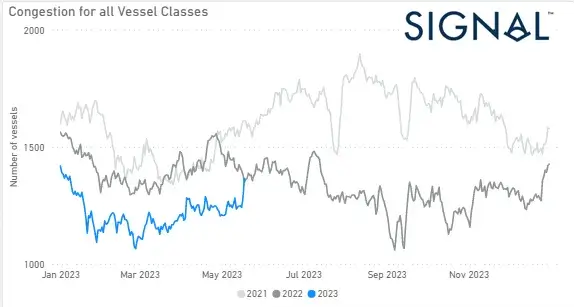
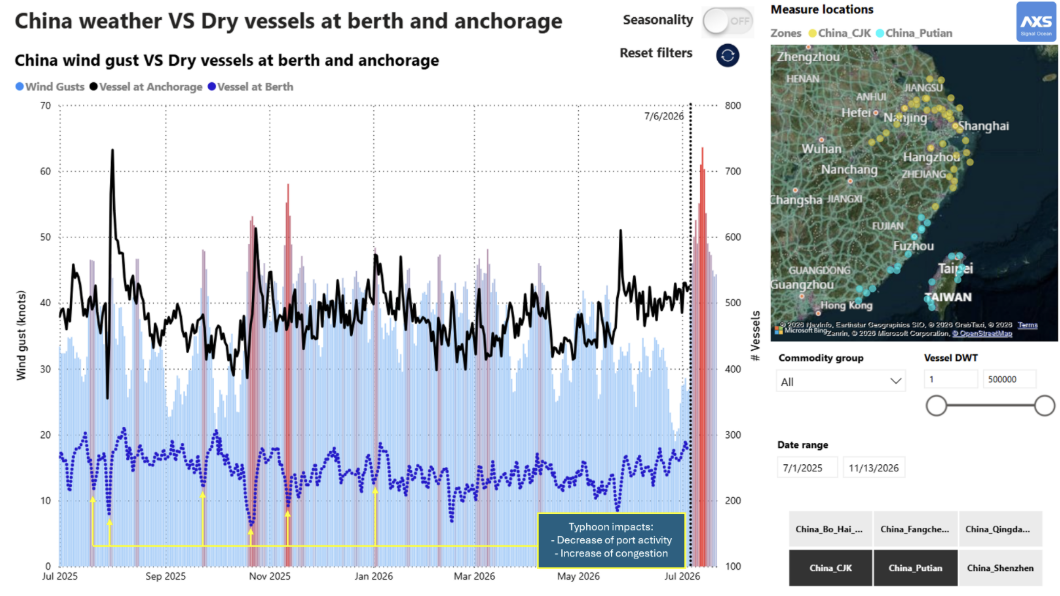
The platform's real-time vessel tracking reveals port congestion patterns and arrival windows that directly impact bunkering costs. Commercial managers use this data to avoid high-demand periods when suppliers charge premium rates, while identifying ports with available berths that reduce demurrage exposure during fuel loading operations.
Vessel Tracking and Port Call Timing
Real-time vessel positions and port call data enable procurement teams to optimize both bunkering location and timing windows. Signal Ocean's tracking shows which ports have capacity constraints and congestion patterns that affect fuel availability and pricing.
Fleet operators use this intelligence to coordinate arrival timing with favorable market conditions. When vessel tracking indicates shorter port queues in Singapore versus Rotterdam, procurement teams can adjust bunkering strategies to capture lower prices while minimizing vessel waiting time.
Refinery Outage Monitoring
Procurement teams gain significant cost advantages by tracking refinery maintenance schedules and unexpected shutdowns before regional price spikes materialize. Signal Ocean's refinery monitoring identifies supply disruption patterns that create 15-30% temporary price increases in affected bunkering hubs.
Real-time outage alerts allow bunker buyers to shift procurement timing or select alternative ports before competitors react to visible price movements. When Singapore's refining capacity drops due to scheduled maintenance, procurement managers can pre-bunker in Hong Kong or redirect vessels to Fujairah while fuel spreads remain narrow.
Supply disruption intelligence transforms reactive procurement into proactive cost management. Teams using refinery outage data consistently avoid peak pricing windows that catch competitors unprepared.
European Natural Gas Price Data
Natural gas prices serve as a leading indicator for LNG bunker costs and alternative fuel availability. When European gas futures spike above $30/MMBtu, LNG becomes cost-prohibitive compared to conventional marine fuels, pushing operators toward VLSFO or marine gas oil.
Signal Ocean's European gas price feeds capture TTF and NBP futures data that procurement teams use for fuel type switching decisions. A $10 swing in TTF prices translates to roughly $150-200 per ton difference in LNG bunker costs.
This data proves crucial for dual-fuel vessel operators who can switch between conventional and gas fuels based on relative pricing. Procurement managers receive alerts when gas-to-oil price ratios hit predetermined thresholds, triggering fuel type reviews before entering bunkering ports with both conventional and LNG infrastructure.
Market Analytics and Freight Rate Context
Freight rate fluctuations directly impact bunkering economics by changing the cost-benefit equation of fuel-efficient routing versus time-sensitive delivery. When freight rates spike, ship operators gain flexibility to burn more fuel on faster direct routes rather than optimizing for fuel economy through slower speeds or longer but cheaper bunkering detours.
Route profitability analytics reveal which trade lanes justify premium fuel costs versus budget alternatives. A container vessel on the Asia-Europe route earning $3,000/TEU can absorb higher-grade fuel costs that would devastate margins on a $800/TEU intra-Asia service.
Signal Ocean's freight rate intelligence helps procurement teams model total voyage economics rather than optimizing fuel costs in isolation. This prevents the common mistake of saving $50,000 on bunkers while losing $200,000 in freight revenue through suboptimal routing decisions.
Integrating Market Intelligence with Procurement Workflows
Maritime intelligence platforms and bunker procurement systems operate as complementary layers in an integrated technology stack, not competing solutions. Intelligence platforms like Signal Ocean feed upstream decision-making, while execution platforms like ZeroNorth and ENGINE handle downstream transactions. This two-tier architecture separates strategic market analysis from operational procurement mechanics.
The Decision Support Layer
Market intelligence informs the critical "when and where" decisions that precede any procurement transaction. Signal Ocean's vessel tracking data reveals optimal bunkering windows based on port congestion and arrival schedules, while refinery outage monitoring provides early warning of supply disruptions that drive regional price spikes. European natural gas price feeds inform LNG procurement timing and alternative fuel hedging strategies before commercial teams engage suppliers through execution platforms.
Connecting Intelligence to Execution
Signal Ocean data integrates directly into existing procurement workflows through API connections and data exports to platforms like ZeroNorth Bunker, Veson IMOS, or ENGINE. Port selection algorithms use vessel position data to identify optimal bunkering locations, while supply disruption alerts trigger accelerated procurement timelines in affected regions. This intelligence layer ensures procurement teams enter negotiations with superior market context, improving both cost outcomes and supplier selection accuracy across their existing execution workflows.
Frequently Asked Questions
What is bunker procurement optimization?
Bunker procurement optimization is the systematic process of using market data, timing analysis, and supplier intelligence to minimize total fuel costs per voyage. This goes beyond simple price comparison to include factors like demurrage risk, fuel quality standards, and compliance requirements. Effective optimization can reduce fuel costs by 3-8% per voyage through better timing and port selection decisions.
How does vessel tracking help with bunkering decisions?
Vessel tracking provides real-time visibility into port congestion levels and vessel arrival schedules, which directly impacts bunkering timing accuracy. When procurement teams know exactly when vessels will arrive and how long port queues are, they can secure bunkering slots without paying demurrage penalties. This visibility also enables last-minute port switching when delays create better pricing opportunities at alternative bunker hubs.
What is the difference between a bunker procurement platform and a maritime intelligence platform?
Bunker procurement platforms handle transaction execution — managing enquiries, supplier negotiations, contracts, and payment workflows. Maritime intelligence platforms provide the upstream decision-support data that informs when and where to bunker, not the actual procurement process. Think of intelligence platforms as the radar system that spots opportunities, while procurement platforms are the tools that execute the transaction once you've decided to act.



Ready to get started and outrun your competition?








.png)







.png)


.png)

.png)

.png)


.png)


.avif)



.avif)