Back to Newsroom

Market Insights | Crude-Laden Tankers Build in Hormuz as Production Cuts Loom

Market Insights
March 17, 2026

Crude-Laden Tankers Build in Hormuz as Production Cuts Loom | Market Insights


What Vessel Data Show this Week

  • Record crude buildup: ~130 million barrels now stored onboard laden vessels.
  • Flow imbalance: Laden vessels exceed ballast, signaling disrupted circulation.
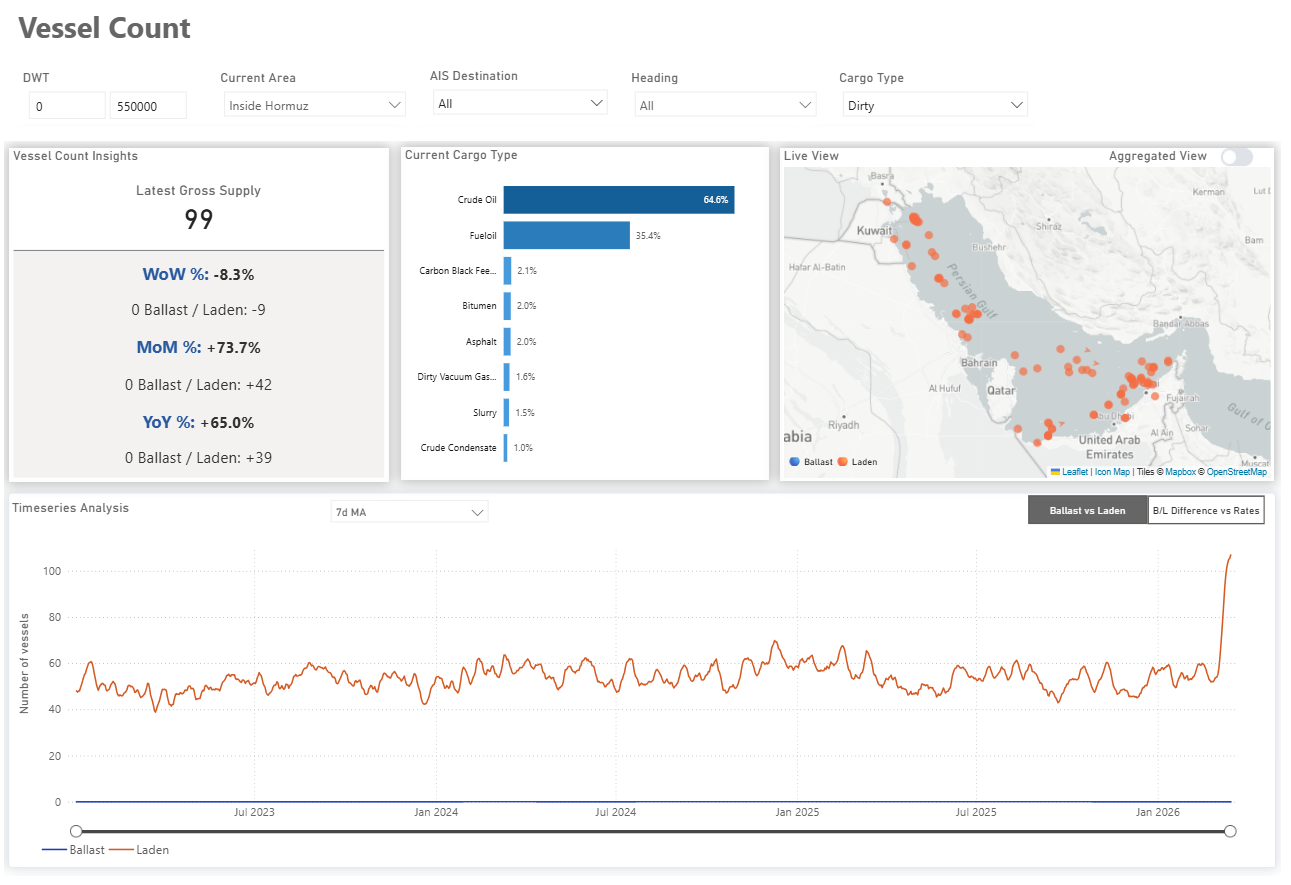
The Signal Ocean Platform (TSOP) | Vessel Count 

Executive Overview

Tensions in the Gulf have been escalating for nearly two weeks, culminating most recently in U.S. strikes on military targets on Kharg Island, Iran’s primary crude export terminal. In parallel with disruptions to export flows, Gulf producers have announced production curtailments of approximately 10 million barrels per day, equivalent to around 5 VLCC cargoes per day, removed from the seaborne market.

To evaluate how these developments are affecting tanker activity in the region, vessel data from The Signal Ocean Platform (TSOP) were analyzed. The scale of the latest production cuts, combined with the record accumulation of laden crude tankers within the Strait of Hormuz, points to the potential for deeper supply reductions and increasing upward pressure on oil prices, with market expectations now shifting toward levels above $100 per barrel. 

This analysis focuses solely on non-sanctioned vessels and examines the number of laden and ballast vessels currently operating in the Strait of Hormuz, as well as capacity utilization across crude and product tanker segments. These indicators provide an early view of how tanker markets are responding to the rapidly evolving security environment in the Gulf.

Laden Tanker Counts Reach Record Levels

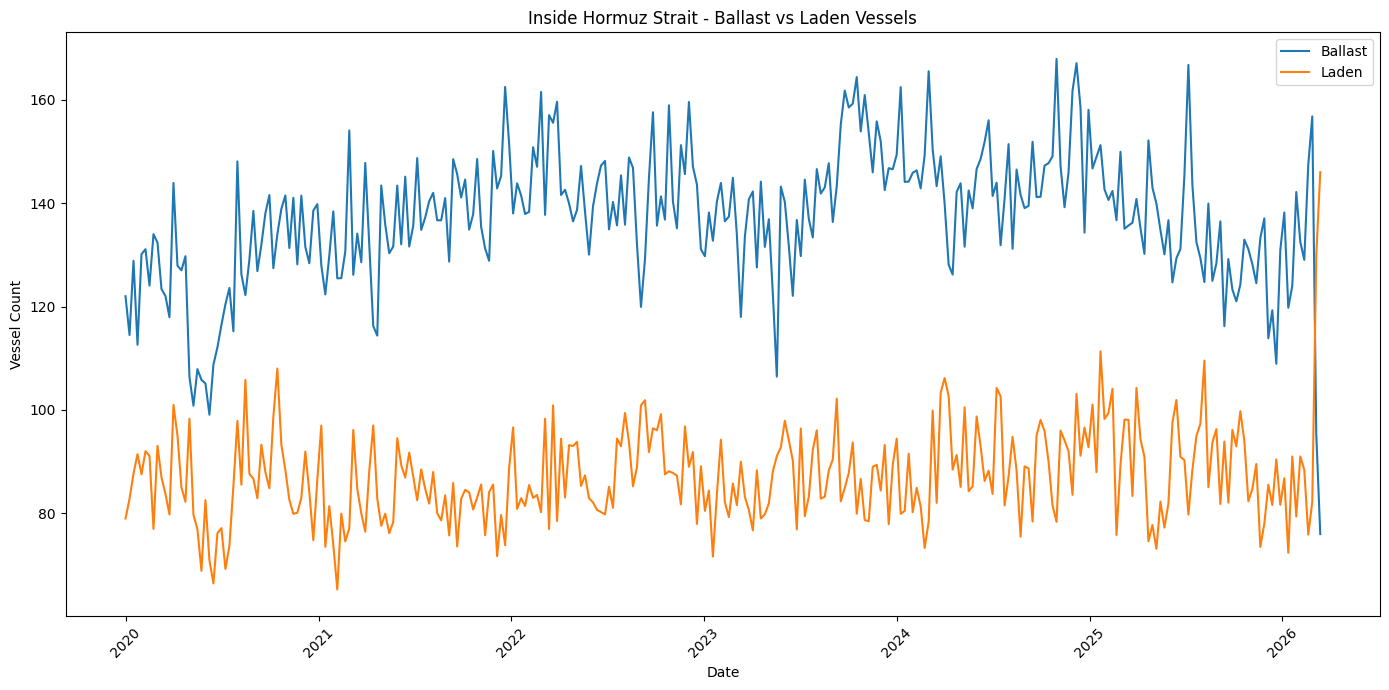
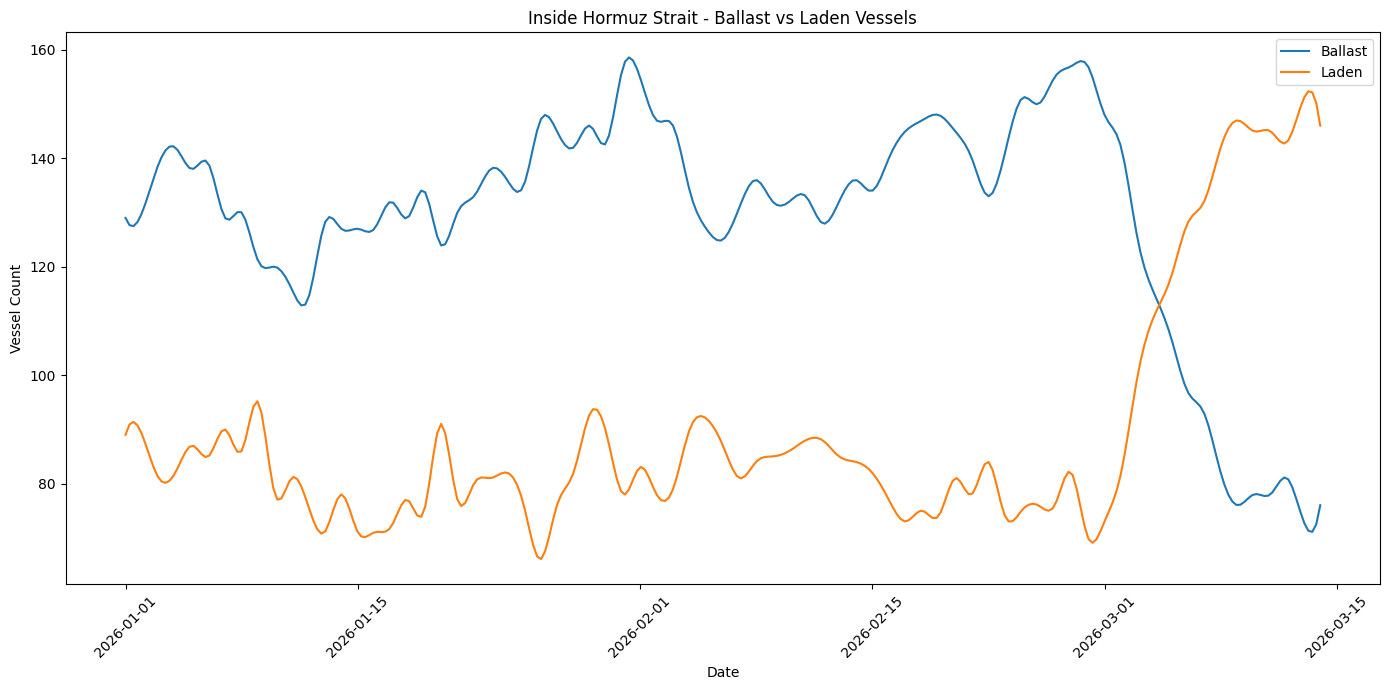
Recent AIS data show a sharp reversal in the typical ballast–laden balance in the Strait of Hormuz, with laden vessels now significantly outnumbering ballast vessels.

Chart 1: Historical Tanker Traffic in the Strait of Hormuz (2020–2026)
Source: Signal Ocean Data Warehouse (TSOP); based on AIS data

During March 2026, owing to the effective closure of the Strait of Hormuz, a clear divergence emerged between ballast and laden tanker counts. Ballast tanker numbers declined sharply, falling from an average of 135 vessels to around 75. Over the same period, laden tanker counts increased significantly, rising from an average of 85 vessels to roughly 145. 

Chart 2: Recent Breakdown in Ballast–Laden Traffic Balance (2026)
Source: Signal Ocean Data Warehouse (TSOP); based on AIS data

Where the Distortion Is Most Visible

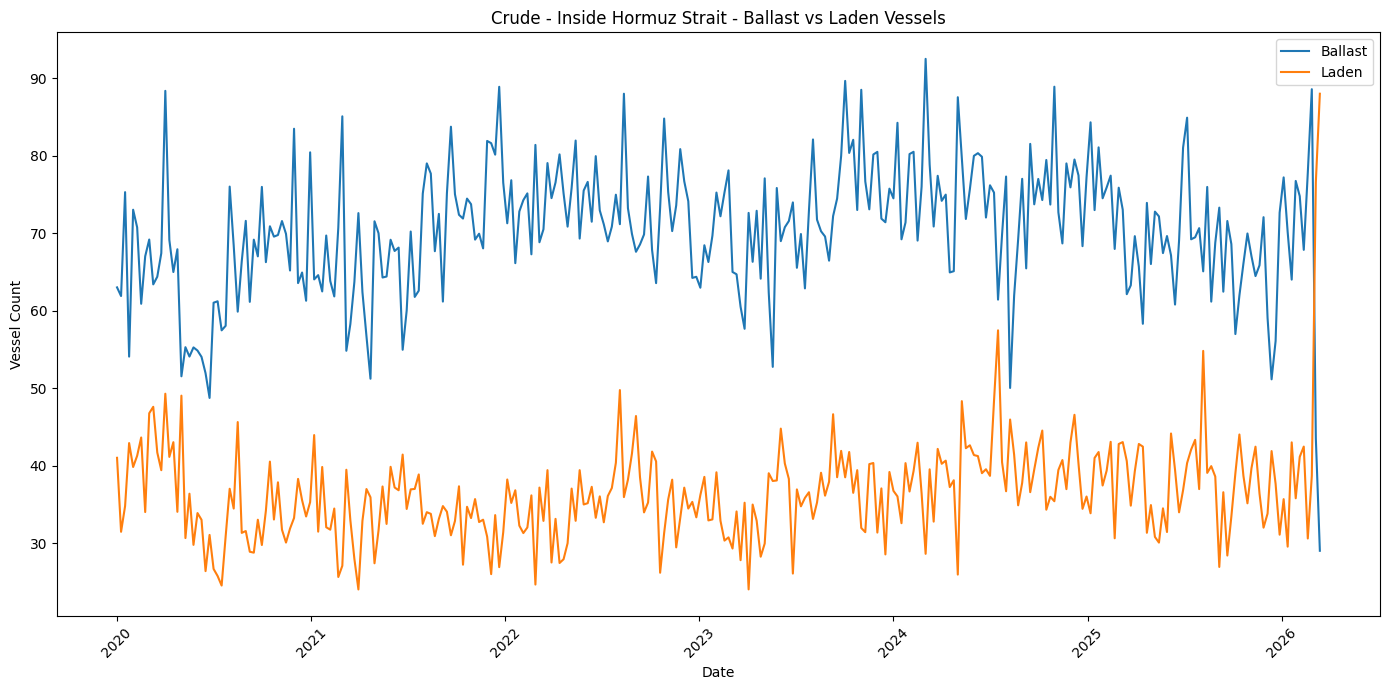
The imbalance becomes particularly clear when focusing on crude tankers specifically. Laden crude tanker counts have risen to roughly 85 vessels, while ballast crude tankers have fallen to about 25 vessels. This indicates a buildup of laden crude carriers inside the Gulf, instead of the normal circulation of vessels exiting the region.

Chart 3: Crude Tanker Traffic Inside the Strait of Hormuz (Ballast vs. Laden)
Source: Signal Ocean Data Warehouse (TSOP); based on AIS data

Crude Cargo Buildup Inside the Strait of Hormuz

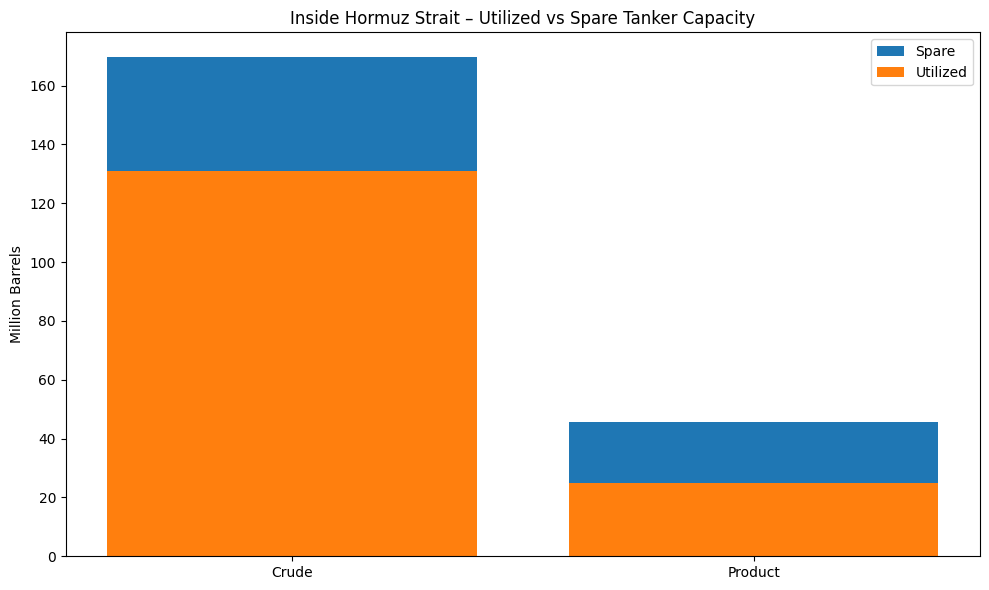
Based on AIS-derived estimates, approximately 130 million barrels of crude oil are currently onboard tankers in the region, with around 40 million barrels of spare capacity remaining.

The pattern is similar for clean product tankers, though on a smaller scale. Roughly 25 million barrels of refined products are currently onboard vessels, with about 20 million barrels of spare product tanker capacity available. 
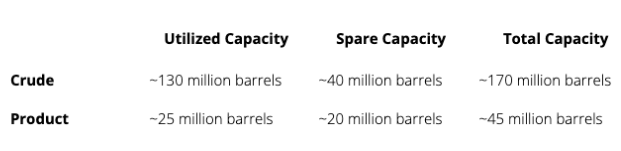
Chart 4: Utilized | Spare Tanker Capacity | Total Capacity
Source: Signal Ocean Data Warehouse (TSOP); based on AIS data

Estimated Daily Transit Capacity

In January 2026, under normal operating conditions, the number of daily tanker transits through the Strait of Hormuz was around 20 each for West to East and East to West (total 40). 

Chart 5: Estimated Daily Transit Capacity (Baseline – January 2026)
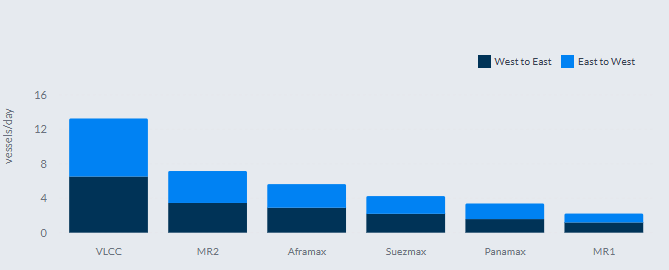
Today’s Reality | Average Daily Transit <2 Per Vessel Class, (March 1-16)

Chart 6: Estimated Daily Transit Capacity (Observed, March 1–16)
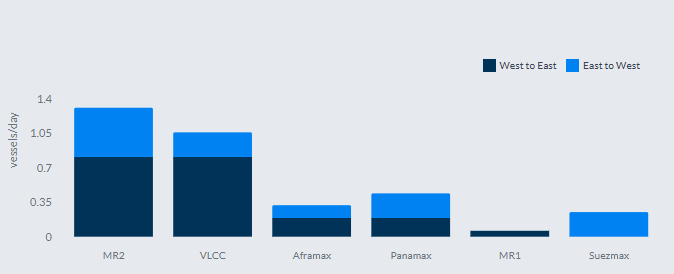
Source: Signal Ocean | Waypoints API Data (last update: March 16, 2026)

AIS vessel counts should be interpreted as indicators of traffic patterns rather than direct measures of crude or clean product export flows.

Although only one or two confirmed vessel transits per day per vessel class are observed on average per day per vessel class, this does not necessarily mean that only that number of ships are passing through the strait. Limited AIS visibility, delayed reporting, or selective disclosure by operators can significantly reduce the number of visible movements. Even under elevated security conditions, the strait may still record approximately 10 to 15 tanker movements per day, if including the vessels not detectable via AIS, which tends to make traffic patterns less predictable due to shadow fleet activity.

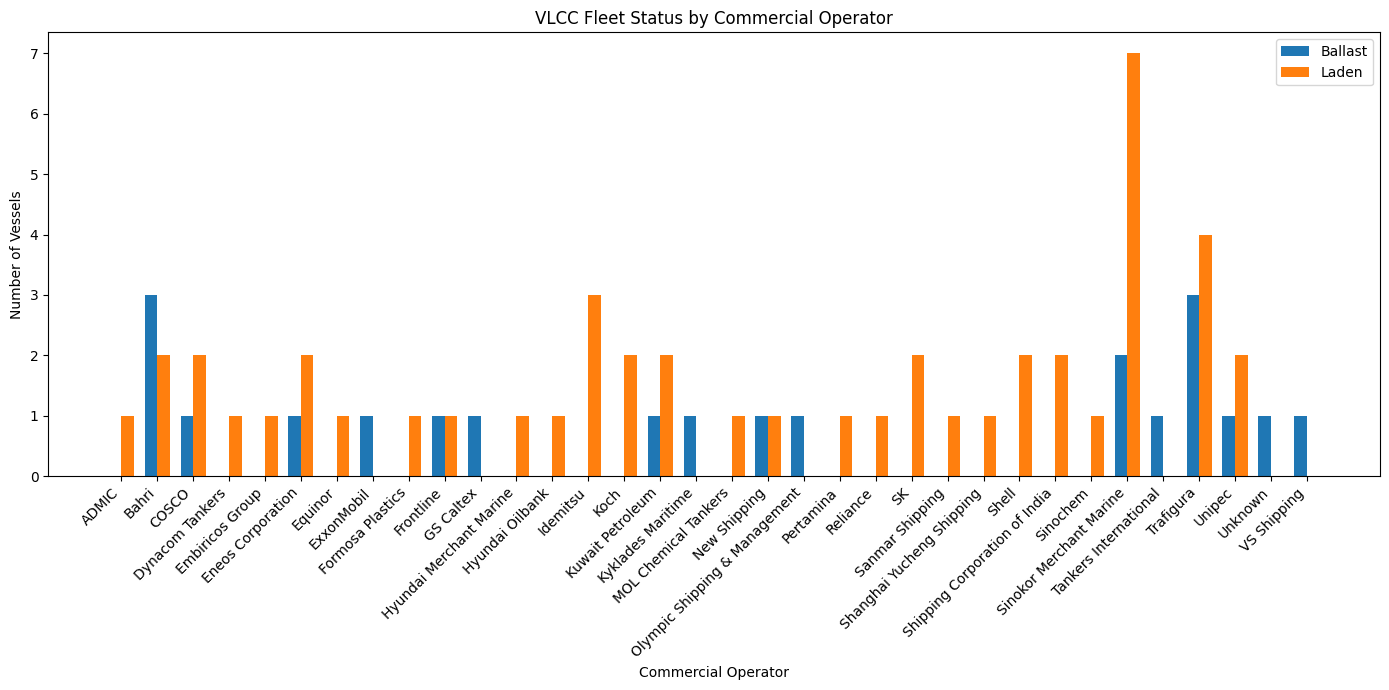
Per Commercial Operator | VLCC, strong concentrations of Asian-linked companies

The operator distribution also highlights a notable presence of Asian-linked companies, including Sinokor, Idemitsu, Unipec, COSCO, Bahri, and trading houses such as Trafigura. Their presence among VLCC operators aligns with the high number of tanker transits through the Strait of Hormuz, as these vessels are largely employed in transporting Middle Eastern crude to Asian import markets.

Chart 7: VLCC Fleet Status by Commercial Operator
Source: Signal Ocean Data Warehouse (TSOP); based on AIS data

Tanker Transits and Insurance Environment

War-risk premiums for Gulf transits have risen significantly following the recent escalation. Industry indications suggest that premiums have increased from roughly 0.2–0.4% of vessel value previously to around 1% in many cases, with significantly higher levels possible for voyages assessed as carrying elevated risk (from 3% to 5%).
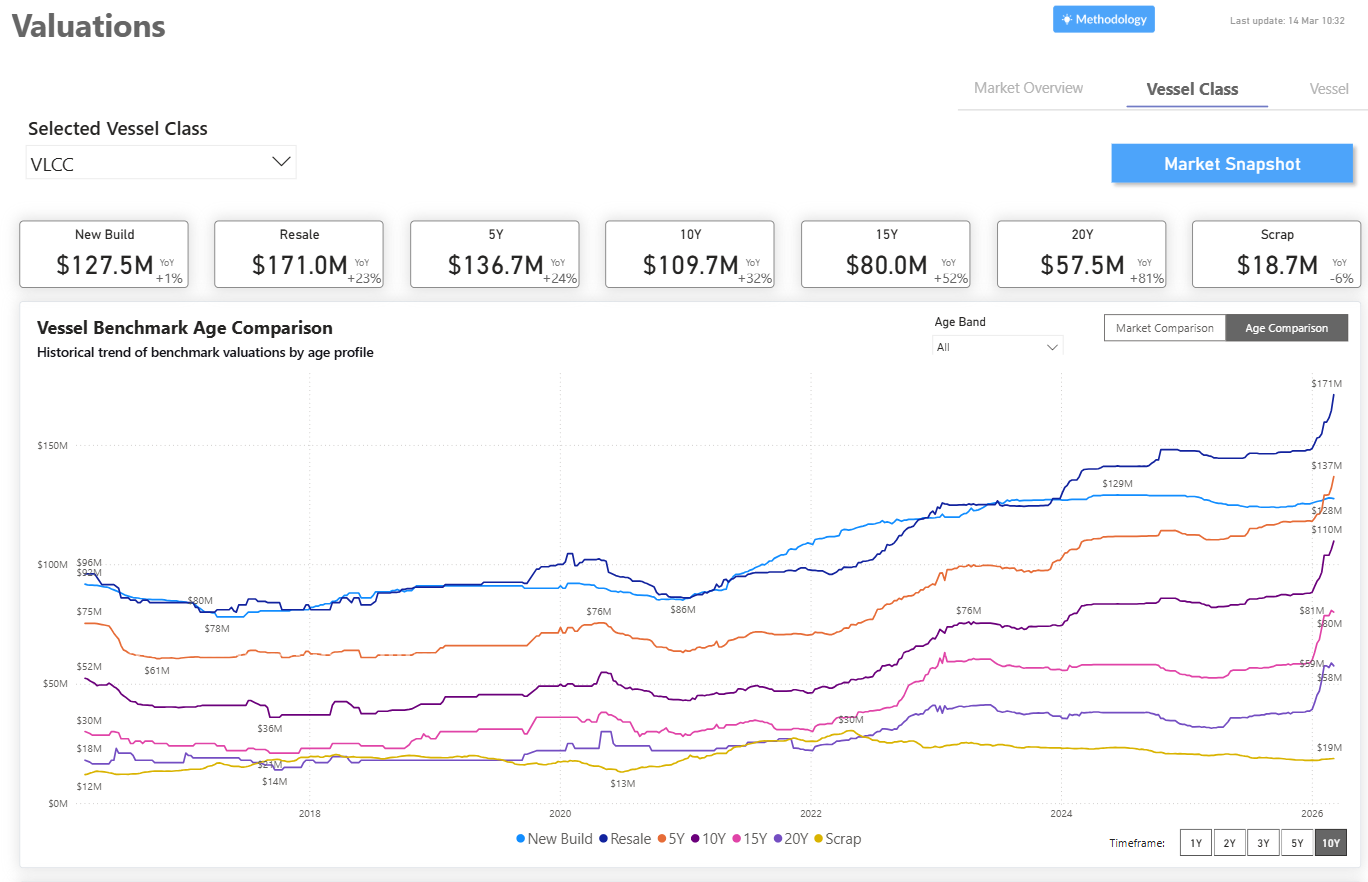
The Signal Ocean Platform (TSOP) | Valuations Market Snapshot

Based on indicative VLCC market valuations of approximately $137 million for a five-year-old vessel and about $110 million for a ten-year-old vessel, a 1% premium could imply costs in the range of approximately $1–1.4 million per transit, with higher-risk scenarios potentially resulting in materially higher premiums.

Market Outlook

Maritime security across the Gulf remains highly volatile, and tanker operators are likely to remain cautious until clearer signals emerge regarding the stability of navigation through the Strait of Hormuz.

In the near term, developments surrounding Iranian export infrastructure, the availability of war-risk insurance, and the willingness of shipowners to deploy vessels in the region will remain key factors shaping tanker freight markets and crude trade flows. At the same time, the continued expansion of Russian exports toward Asia, the increased use of Red Sea export routes for Saudi crude, and the operational flexibility of the shadow fleet demonstrate that global energy logistics are already adapting to the evolving geopolitical landscape.

With the Strait effectively closed and no tonnage replenishment entering the Gulf, vessels already inside are increasingly filling with crude and acting as temporary floating storage. This provides producers with a short-term buffer, but as long as export bottlenecks persist and tanker capacity becomes saturated, further production cuts may become increasingly unavoidable.

All data, estimates, and projections presented herein are based on information available as of [March 16, 2026]. While every effort has been made to ensure accuracy, the analysis is subject to revision as additional information becomes available.

Creating a sustainable world requires us to embark on a journey towards a zero emission future, where every step is a commitment to preserve our planet for future generations.
Albert Greenway
Environmental Scientist, Sustainability Expert
No items found.

Increased Use of Renewable Energy:

Shipping companies are embracing renewable energy sources to power onboard systems and reduce emissions during port operations. Solar panels and wind turbines are being installed on vessels to generate clean energy, reducing reliance on auxiliary engines, and cutting down emissions. Shore power facilities in ports allow ships to connect to the electrical grid, eliminating the need for onboard generators while docked.

Collaboration and Industry Partnerships:

Recognizing that addressing emissions requires collective action, shipping companies, governments, and organizations have formed partnerships and collaborations. These initiatives focus on research and development, sharing best practices, and promoting knowledge transfer. Joint projects aim to develop and deploy innovative technologies, improve infrastructure, and create a supportive regulatory framework to accelerate the industry's transition towards a greener future. The Zero Emission Shipping - Mission Innovation.

To pave the way for a greener future in shipping, the availability of alternative fuels plays a vital role in their widespread adoption. However, this availability is influenced by factors such as port infrastructure, local regulations, and government policies. As the demand for cleaner fuels in shipping rises and environmental regulations become more stringent, efforts are underway to improve the accessibility of these fuels through infrastructure development, collaborations, and investments in production facilities.

Liquefied Natural Gas (LNG) infrastructure has seen significant growth in recent years, resulting in more LNG bunkering facilities and LNG-powered vessels. Nonetheless, the availability of LNG as a marine fuel can still vary depending on the region. To ensure consistent availability worldwide, there is a need for further development of LNG supply chains and infrastructure. For biofuels, their availability hinges on production capacity and the availability of feedstock. Although biofuels are being produced and utilized in various sectors, their availability as a marine fuel remains limited. Scaling up biofuel production and establishing robust supply chains are imperative to ensure wider availability within the shipping industry.Hydrogen, as a fuel for maritime applications, is still in the early stages of infrastructure development. While some hydrogen vessels have been tested or introduced in the first quarter of last year, the infrastructure required for hydrogen production and distribution needs further advancement.

Ammonia, as a marine fuel, currently faces limitations in availability. The production, storage, and handling infrastructure for ammonia need further development to support its widespread use in the shipping industry.Methanol, on the other hand, is already a commercially available fuel and has been used as a blend with conventional fuels in some ships. However, its availability as a standalone marine fuel can still be limited in certain regions. Bureau Veritas in October 2022 published a White Paper for the Alternative Fuels Outlook. This white paper provides a comprehensive overview of alternative fuels for the shipping industry, taking into account key factors such as technological maturity, availability, safety, emissions, and regulations.

Creating a sustainable world requires us to embark on a journey towards a zero emission future, where every step is a commitment to preserve our planet for future generations.
Albert Greenway
Environmental Scientist, Sustainability Expert

Increased Use of Renewable Energy:

Shipping companies are embracing renewable energy sources to power onboard systems and reduce emissions during port operations. Solar panels and wind turbines are being installed on vessels to generate clean energy, reducing reliance on auxiliary engines, and cutting down emissions. Shore power facilities in ports allow ships to connect to the electrical grid, eliminating the need for onboard generators while docked.

Collaboration and Industry Partnerships:

Recognizing that addressing emissions requires collective action, shipping companies, governments, and organizations have formed partnerships and collaborations. These initiatives focus on research and development, sharing best practices, and promoting knowledge transfer. Joint projects aim to develop and deploy innovative technologies, improve infrastructure, and create a supportive regulatory framework to accelerate the industry's transition towards a greener future. The Zero Emission Shipping - Mission Innovation.

To pave the way for a greener future in shipping, the availability of alternative fuels plays a vital role in their widespread adoption. However, this availability is influenced by factors such as port infrastructure, local regulations, and government policies. As the demand for cleaner fuels in shipping rises and environmental regulations become more stringent, efforts are underway to improve the accessibility of these fuels through infrastructure development, collaborations, and investments in production facilities.

Liquefied Natural Gas (LNG) infrastructure has seen significant growth in recent years, resulting in more LNG bunkering facilities and LNG-powered vessels. Nonetheless, the availability of LNG as a marine fuel can still vary depending on the region. To ensure consistent availability worldwide, there is a need for further development of LNG supply chains and infrastructure. For biofuels, their availability hinges on production capacity and the availability of feedstock. Although biofuels are being produced and utilized in various sectors, their availability as a marine fuel remains limited. Scaling up biofuel production and establishing robust supply chains are imperative to ensure wider availability within the shipping industry.Hydrogen, as a fuel for maritime applications, is still in the early stages of infrastructure development. While some hydrogen vessels have been tested or introduced in the first quarter of last year, the infrastructure required for hydrogen production and distribution needs further advancement.

Ammonia, as a marine fuel, currently faces limitations in availability. The production, storage, and handling infrastructure for ammonia need further development to support its widespread use in the shipping industry.Methanol, on the other hand, is already a commercially available fuel and has been used as a blend with conventional fuels in some ships. However, its availability as a standalone marine fuel can still be limited in certain regions. Bureau Veritas in October 2022 published a White Paper for the Alternative Fuels Outlook. This white paper provides a comprehensive overview of alternative fuels for the shipping industry, taking into account key factors such as technological maturity, availability, safety, emissions, and regulations.

Ready to get started and outrun your competition?

Request a Demo

Read next