.webp)

Crude Oil Cargo Flows & Trade Intelligence: How Energy Traders Track Global Supply Shifts


drives these stories

TL;DR
- AIS transponder data, mandated by the IMO on every ship over 300 gross tonnes since 2004, gives traders a near-real-time view of the seaborne trade that carries over 80% of merchandise by volume.
- Tanker anchorage time more than doubled in 2020, from 15.63 to 33.04 hours, marking floating storage and demand destruction before official figures confirmed them.
- LNG flow tracking now sits alongside crude analysis, since 12–14% of Europe's LNG passes through the Strait of Hormuz from Qatar.
- Chokepoint passage rates expose disruption fast. Red Sea activity fell 45% in 2024.
- Signal Ocean supplies the vessel and market intelligence layer, with a free LNG Flows tool as an open entry point.
Why Crude Oil Cargo Flow Tracking Defines the Edge in Energy Markets
More than 80% of international merchandise trade moves by sea, which makes the position and behavior of cargo vessels a near-real-time proxy for global supply (Medium). Official trade statistics arrive weeks after the fact, while AIS signals from ships in motion publish within days. That timing gap decides who prices a supply shift first.
Geopolitical shocks turned cargo flow data into a market-moving category that desks can no longer treat as supplementary. When the Ever Given blocked the Suez Canal for six days in March 2021, an estimated $9.6 billion in goods per day backed up behind it, and 432 vessels carrying $92.7 billion in cargo waited for the channel to clear. The Red Sea disruptions cut Suez crossings by 66% in early 2024 and rerouted Asia-Europe traffic around the Cape of Good Hope, adding 10 to 14 days per voyage.
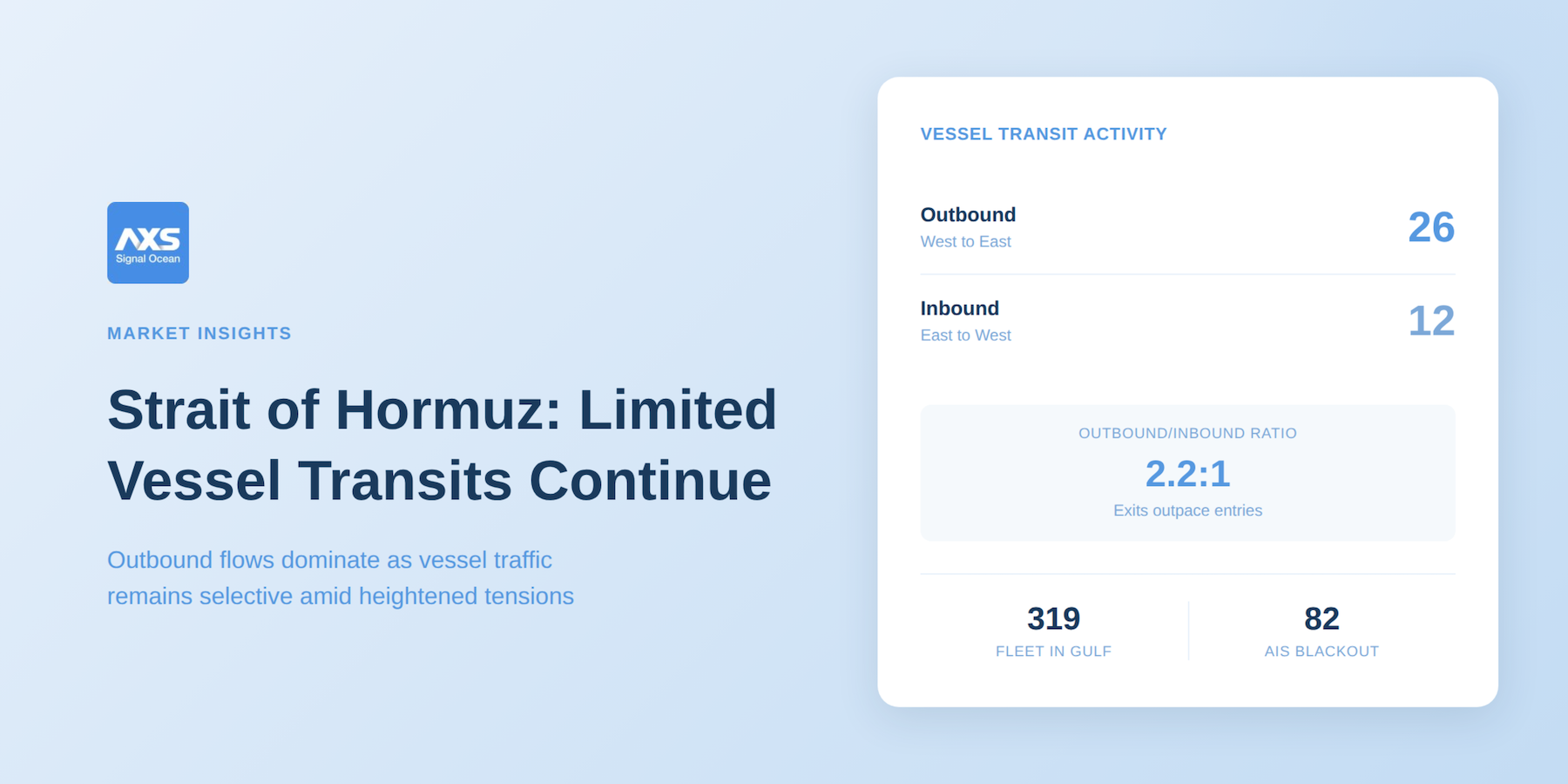
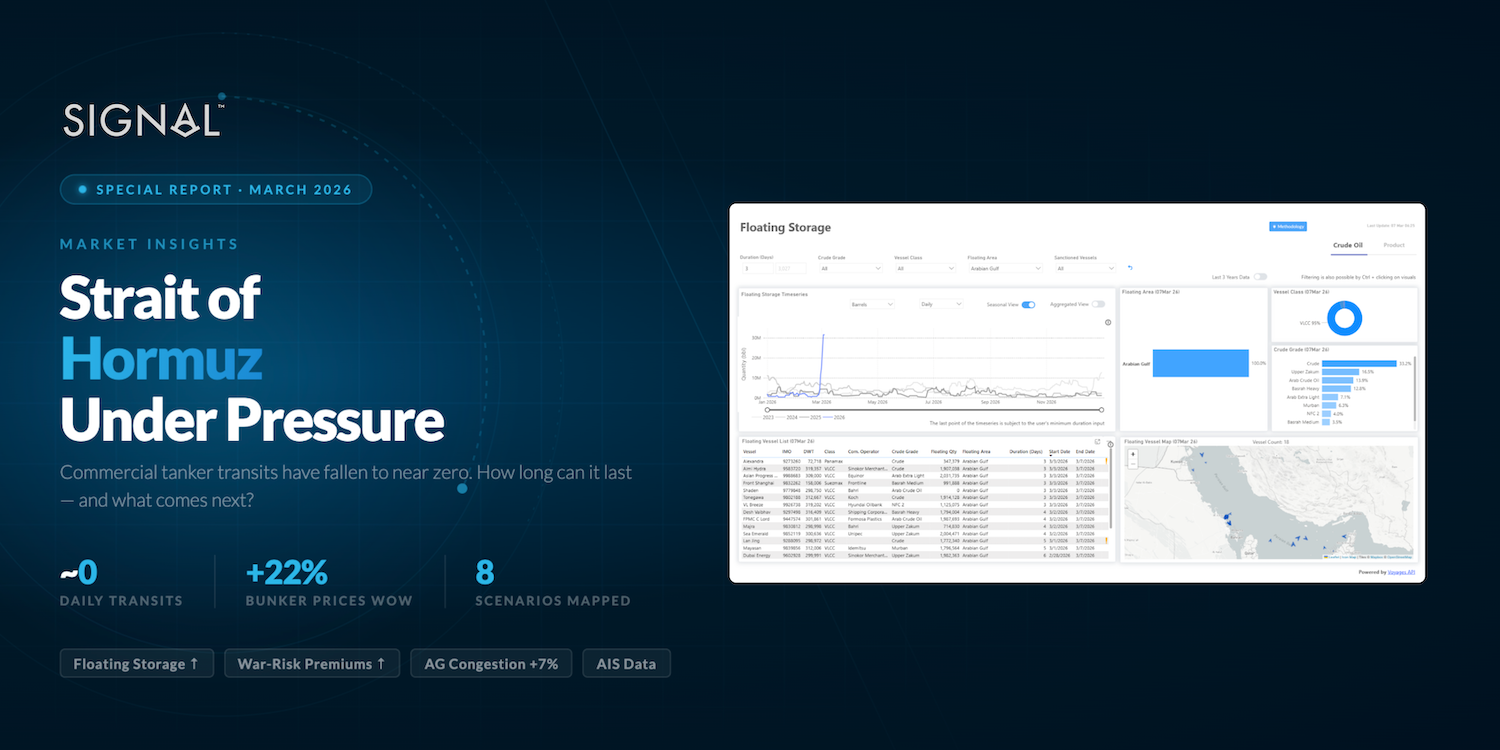
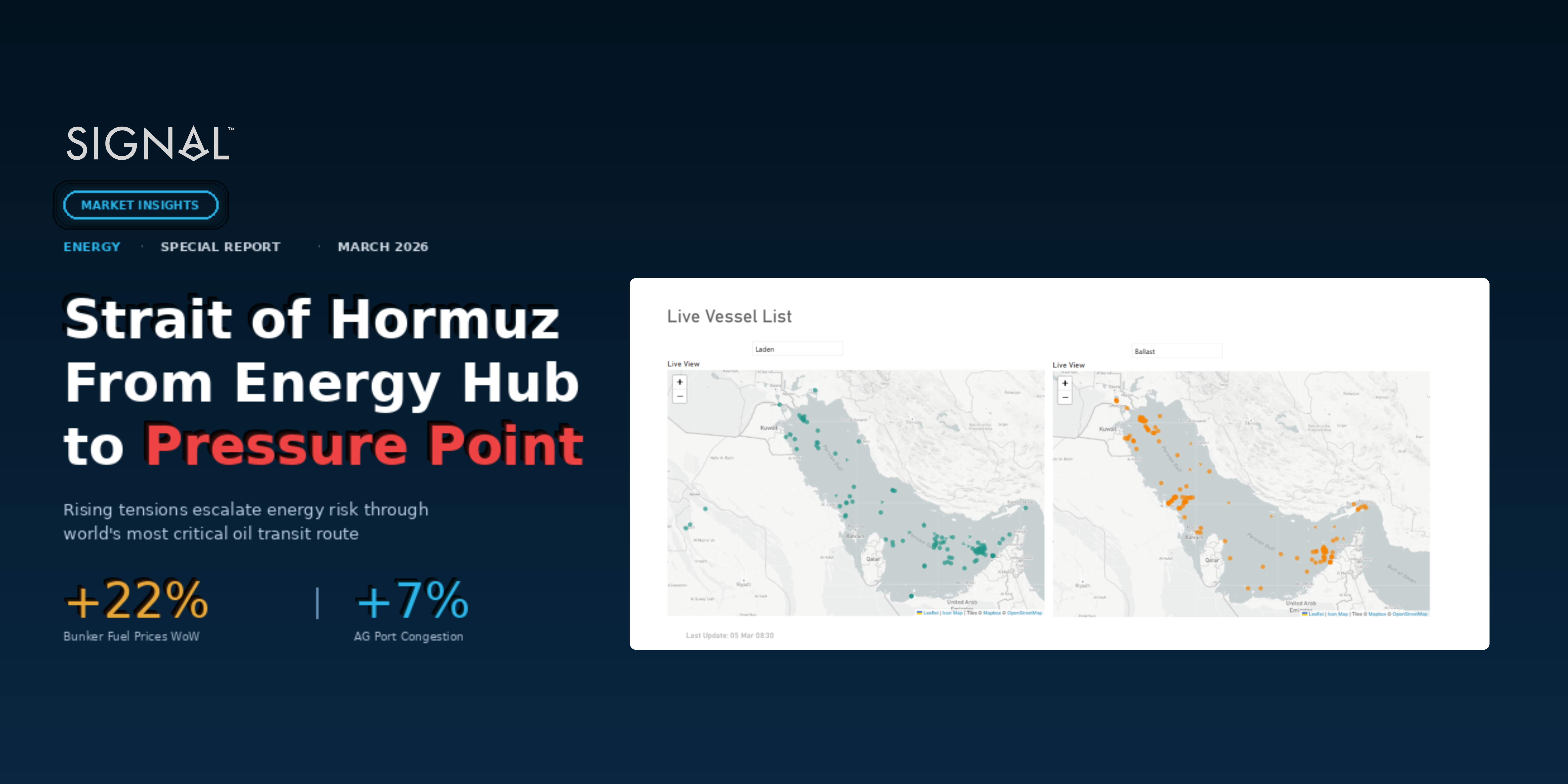
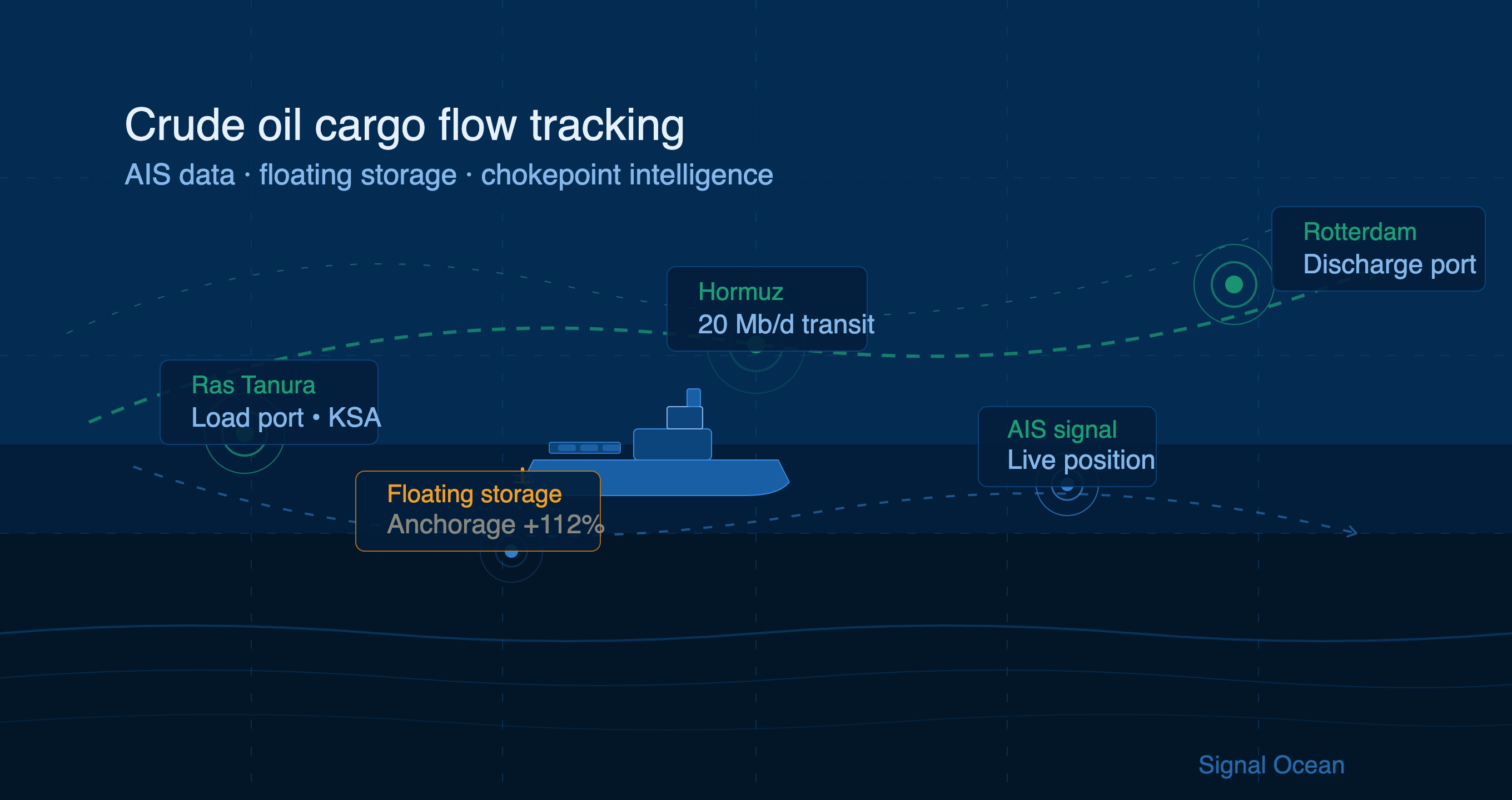
The Strait of Hormuz alone carries roughly 20 million barrels of oil a day, about 20% of global petroleum liquids. A traders who watches tanker traffic through that corridor sees a supply interruption forming before the price reflects it. Kpler and Vortexa now command fees that rival a Bloomberg Terminal because that lead time is worth paying for.
How AIS Data Powers Cargo Flow Tracking
Every maritime intelligence platform you can buy rests on the same raw feed, the Automatic Identification System. Since 2004, the International Maritime Organisation has required every ship over 300 gross tonnes on an international voyage to carry an AIS transponder. Each device broadcasts identity, position, speed, heading, and navigational status every few seconds over VHF radio. Land-based stations capture these signals near coastlines, and satellites fill the gaps over open ocean where terrestrial receivers cannot reach. That combined coverage is what lets a platform track a tanker across the Indian Ocean, not just into port.
Raw position alone tells you little about cargo. The value comes from the signals analysts derive from the feed. A vessel slowing to a crawl far from any port suggests demand adjustment or a chartering delay. Loitering or extended time at anchor flags port congestion or floating storage rather than a normal transit. A port call sequence reveals the structured route a ship runs, which lets you infer what it loads and where it delivers.
The single most direct cargo signal is draft change. A tanker sits lower in the water when loaded, so a draft drop recorded after departure indicates oil came aboard. The UK ONS used draught changes to estimate cargo volumes and found a strong correlation between these shipping indicators and official import figures, published within days rather than weeks.
The Four Data Signals That Move Energy Trading Desks
Four signals carry most of the analytical weight in cargo flow tracking, ranked here by how directly they translate into a trading view.
1. Port call data and voyage sequencing
Port calls reveal structured trade routes that a single vessel position cannot. By stitching arrivals and departures into voyages, analysts reconstruct which exporters feed which buyers and at what cadence. The UN Global Platform monitors weekly port calls from roughly 1,200 ports worldwide, processing about 28 million AIS messages a day, which gives desks a near-real-time map of where crude actually moves.
2. Draft and load changes as cargo volume proxies
Draft tells you how much a tanker is carrying. A vessel sits lower in the water when loaded, so a draft drop recorded after departure from a load port indicates cargo aboard. The UK ONS built cargo load estimates directly from draught changes and found a strong correlation between these shipping indicators and official import figures, published within days rather than weeks.
3. Anchorage and loitering time
Time at anchor separates congestion from floating storage. Average tanker anchorage time rose from 15.63 hours in 2019 to 33.04 hours in 2020, more than doubling as demand collapsed and owners parked loaded ships offshore. Prolonged loitering at known load ports signals chartering delays or oil deliberately held off the market.
4. Trade route deviation
Chokepoint passage rates and rerouting expose supply stress before prices fully adjust. Red Sea shipping activity fell from over 1.1 million nautical miles in 2023 to roughly 600,000 in 2024, a 45% decline, as carriers diverted around the Cape of Good Hope and added 10 to 14 days to Asia-Europe runs. Tracking that diversion early lets desks price freight and arrival timing ahead of the consensus.
Floating Storage as a Leading Supply Indicator
Floating storage tells you about supply before the supply reaches a refinery, which is why traders watch it as a price signal rather than a logistics footnote. When sellers cannot find buyers, crude piles up on idle tankers, and rising barrels-on-water flags an oversupply that will pressure prices once it lands. Bloomberg cited Vortexa data showing oil on tankers in transit jumped to its highest level since 2016, a read on global glut that arrived weeks ahead of official inventory reports.
Sanctions sharpen the signal. Reuters cited Kpler and Vortexa data showing Iran held roughly 50 days of output stranded on the water in early January as Chinese buyers pulled back. The same buildup appeared in 2020 anchorage data, when tanker time at anchor rose from 15.63 hours to 33.04 hours, more than doubling as demand collapsed.
The analytical trap is mistaking a vessel parked for storage for one paused mid-voyage. A platform that distinguishes deliberate floating storage from transit delays gives you a cleaner glut signal, because anchorage time alone conflates congestion, chartering gaps, and genuine storage into one ambiguous number.
LNG Cargo Flows: Tracking the Other Energy Stream
European and Asian desks that once treated LNG as a separate book now read it alongside crude, because the two stocks share the same chokepoints. The Strait of Hormuz carries roughly 20 million barrels of oil a day, and it also moves 12 to 14% of Europe's LNG from Qatar. A disruption that spikes Brent hits Dutch TTF gas in the same week, so watching only crude leaves half the exposure unmeasured.
Signal Ocean's free LNG Flows tool gives traders a public starting point with no login required. The page renders three view modes. Single Vessel tracks one carrier, Commercial Operator Fleets groups carriers by the company running them, and Vessel Class Overview aggregates by ship type. Those three lenses let an analyst move from a single cargo to a fleet-wide picture without leaving the page.
The tool sits as an open entry point rather than a full intelligence product, and a demo prompt on the same page routes serious users into the broader Signal Ocean platform. For a desk testing whether LNG flow data belongs in its crude workflow, the free version answers that question before any subscription.
What to Look for in a Maritime Intelligence Platform
Start with where the platform gets its data, because every downstream signal inherits the limits of its source. Terrestrial AIS receivers cover busy coastlines well but lose ships in open ocean, so a platform leaning only on land stations misses the long-haul tanker legs that matter most for crude. Ask for satellite coverage, the number of vessels tracked, and how often positions refresh. A platform updating hourly tells you less about a slowing VLCC than one updating in near real time.
Judge cargo inference next, since raw position data alone does not tell you what a ship carries. Strong platforms estimate load volume from draft changes and flag manipulation directly. Kpler tracks nearly 3,000 tankers linked to high-risk crude and publishes spoofing events where a vessel's broadcast position diverges from its satellite-confirmed location (linkedin.com). Without that detection layer, sanctioned barrels move invisibly through your model.
Check whether you can pull data programmatically or only click through a dashboard. A commodity desk feeding signals into pricing models needs API and data warehouse access, not a UI built for one analyst at a time. Signal Ocean lists a Data Warehouse and APIs as a distinct product section alongside its platform features (thesignalgroup.com).
Confirm asset class breadth, because a desk pricing crude often watches LNG and product tankers in the same week. Test accessibility last. Free entry points like Signal Ocean's LNG Flows tool let you evaluate the underlying data before committing to an enterprise subscription.
Crude Oil Cargo Intelligence: Who Uses What and Why
Three buyer profiles pull different signals from the same vessel data, and the table below maps what each one needs.
Energy traders read these signals to anticipate price moves before official statistics print. Compliance teams use them to screen counterparties against sanctions risk. Operators and brokers turn them into chartering and routing decisions that protect margin.
How Signal Ocean Fits Into the Maritime Intelligence Stack
Signal Ocean operates as the vessel and market intelligence layer beneath a trading desk's workflow, describing its product as a 360-degree view of commercial shipping. The company says it is trusted by over 200 customers, which signals a production-grade platform serving brokers, owners, and charterers rather than an experimental tool. Signal Ocean sits under The Signal Group alongside Signal Maritime, the group's ship management arm, and Signal Ventures.
Two structural features matter for commodity desks evaluating integration. Signal Ocean lists a Data Warehouse and APIs as a distinct product section, which means you can pull vessel and market data into your own models rather than working only through a dashboard. The platform also ships an Android app, so analysts can check positions and movements away from a desk.
The free LNG Flows tool gives you a no-login entry point to test Signal Ocean's data before committing. It renders three views, covering a single vessel, commercial operator fleets, and a vessel class overview. A "Request a Demo" prompt on the same page routes interested users into the full platform, so the free tool doubles as the front door to Signal Ocean's broader vessel intelligence.
Summary: Key Signals for Crude Oil Cargo Flow Tracking
Five signals carry most of the analytical weight in crude cargo tracking.
AIS position → A vessel's live location, speed, and heading → Maps active voyages and confirms which routes carriers actually take.
Draft change → How deep a ship sits in the water → A post-departure draft drop confirms cargo loaded and estimates volume.
Anchorage time → Hours spent idle before berth → Flags port congestion or floating storage when tanker idle time doubles, as it did in 2020.
Chokepoint passage rate → Crossings through Hormuz, Bab el-Mandeb, or Suez → Quantifies disruption, like the 45% Red Sea decline in 2024.
Floating storage volume → Crude held offshore on idle tankers → A leading supply glut or deficit signal that precedes price moves.
Explore Signal Ocean's Maritime Intelligence Platform
Start with Signal Ocean's free LNG Flows tool, which tracks LNG carrier movements across single vessels, commercial operator fleets, and vessel class views with no login required. It gives commodity desks a working sample of the vessel intelligence Signal Ocean produces. For crude tanker coverage, port call data, and API access to the full data warehouse, request a demo of the Signal Ocean platform.
FAQs
What is AIS data and how is it used in crude oil trading?
AIS is the automatic identification system that ships over 300 gross tonnes broadcast under an IMO mandate, transmitting identity, position, speed, heading, and navigational status every few seconds. Traders use AIS feeds to track tanker movements, infer cargo loads from draft changes, and time supply shifts before official statistics publish. Signal Ocean draws on this data to give commodity desks a near-real-time view of crude in motion.
How is floating storage detected from vessel tracking data?
Analysts flag floating storage when a laden tanker sits idle at anchor or loiters offshore for extended periods rather than proceeding to discharge. Reuters cited Kpler and Vortexa data showing Iran held roughly 50 days of output on the water in early January, a classic supply-glut signal.
What does Signal Ocean's LNG Flows tool show?
Signal Ocean's free LNG Flows tool tracks LNG carrier movements with no login required. It renders three views: Single Vessel, Commercial Operator Fleets, and Vessel Class Overview, giving European and Asian desks a public starting point for monitoring gas supply.
How do maritime intelligence platforms detect AIS spoofing on sanctioned tankers?
Platforms compare broadcast AIS positions against satellite imagery and flag divergence between where a vessel claims to be and where it actually is. Kpler tracks nearly 3,000 high-risk tankers and catches tactics like spoofing at known load ports and reusing identities from decommissioned ships.


Ready to get started and outrun your competition?








.png)







.png)


.png)

.png)

.png)


.png)


.avif)



.avif)