Subscribe for our latest news, straight to your inbox:
Thank you! Your submission has been received!
Oops! Something went wrong while submitting the form.
Share this post
Hormuz Disruption Weighs on Alumina as Aluminium Flows Surge
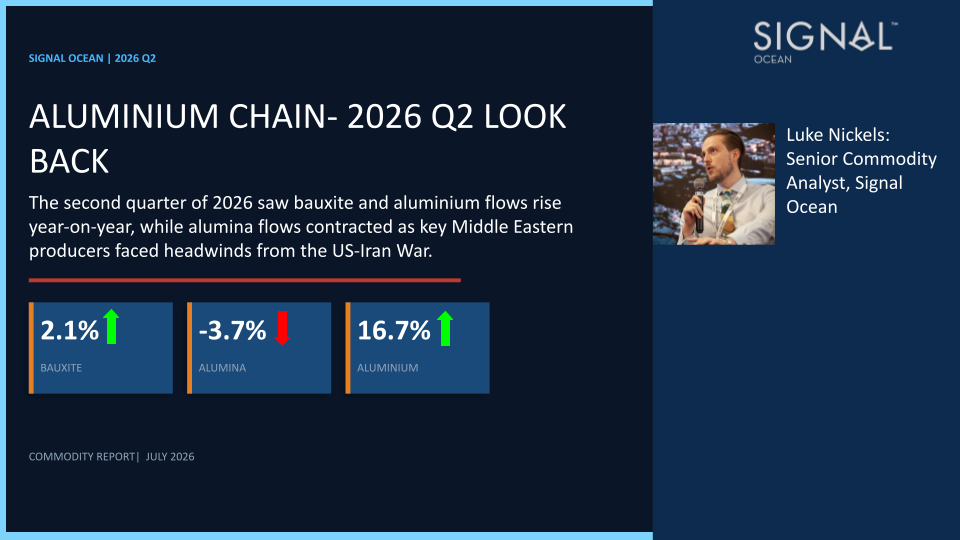
The second quarter of 2026 saw further disruption to the aluminium supply chain, particularly weighing on aluminia flows to the Arabian Gulf.
A surge in aluminium flows was driven by incremental increases in exports originating from Australia and Canada. The outlook for the chain remains dependent on the re-escalation of the conflict between the US and Iran.
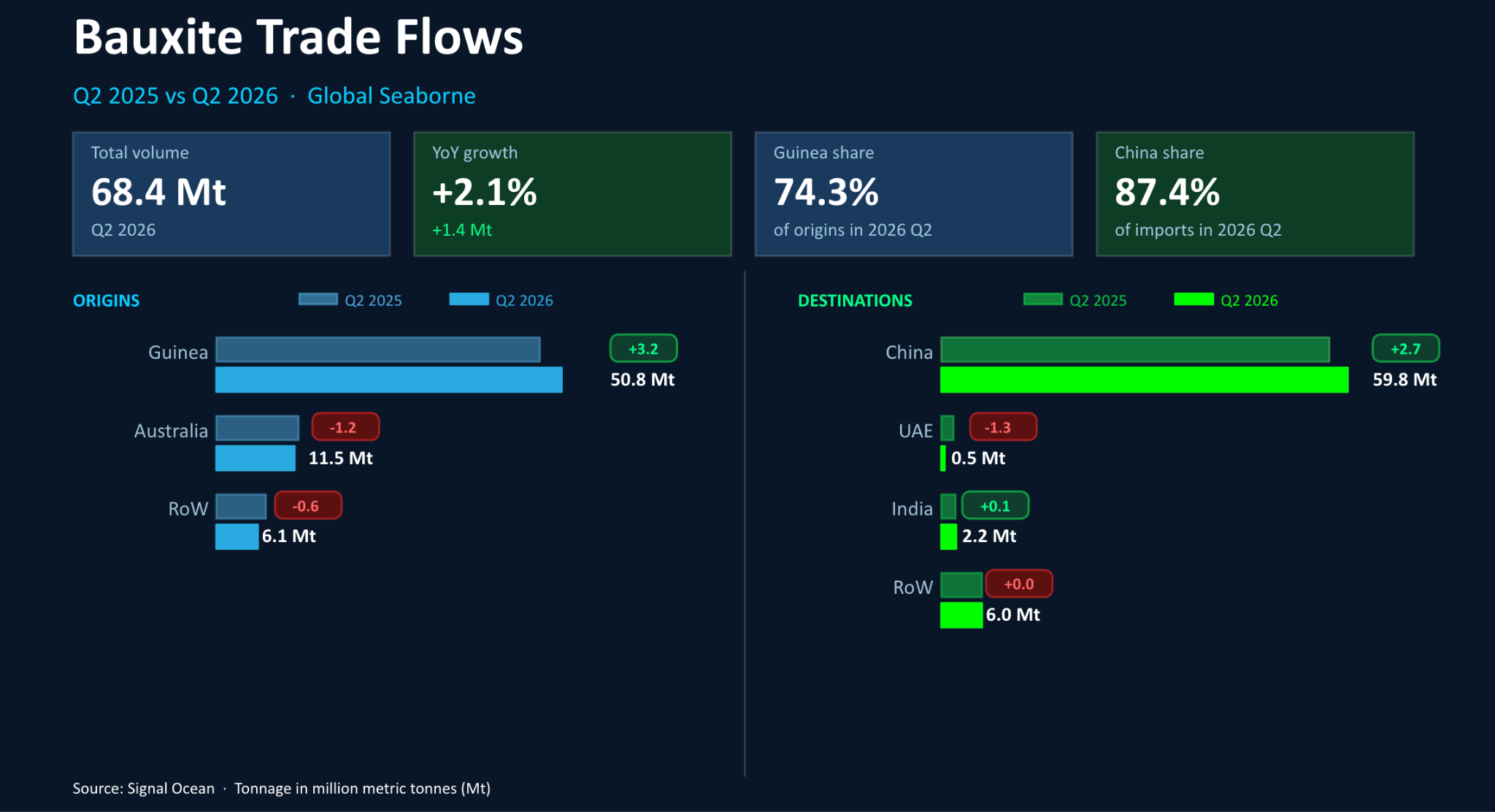
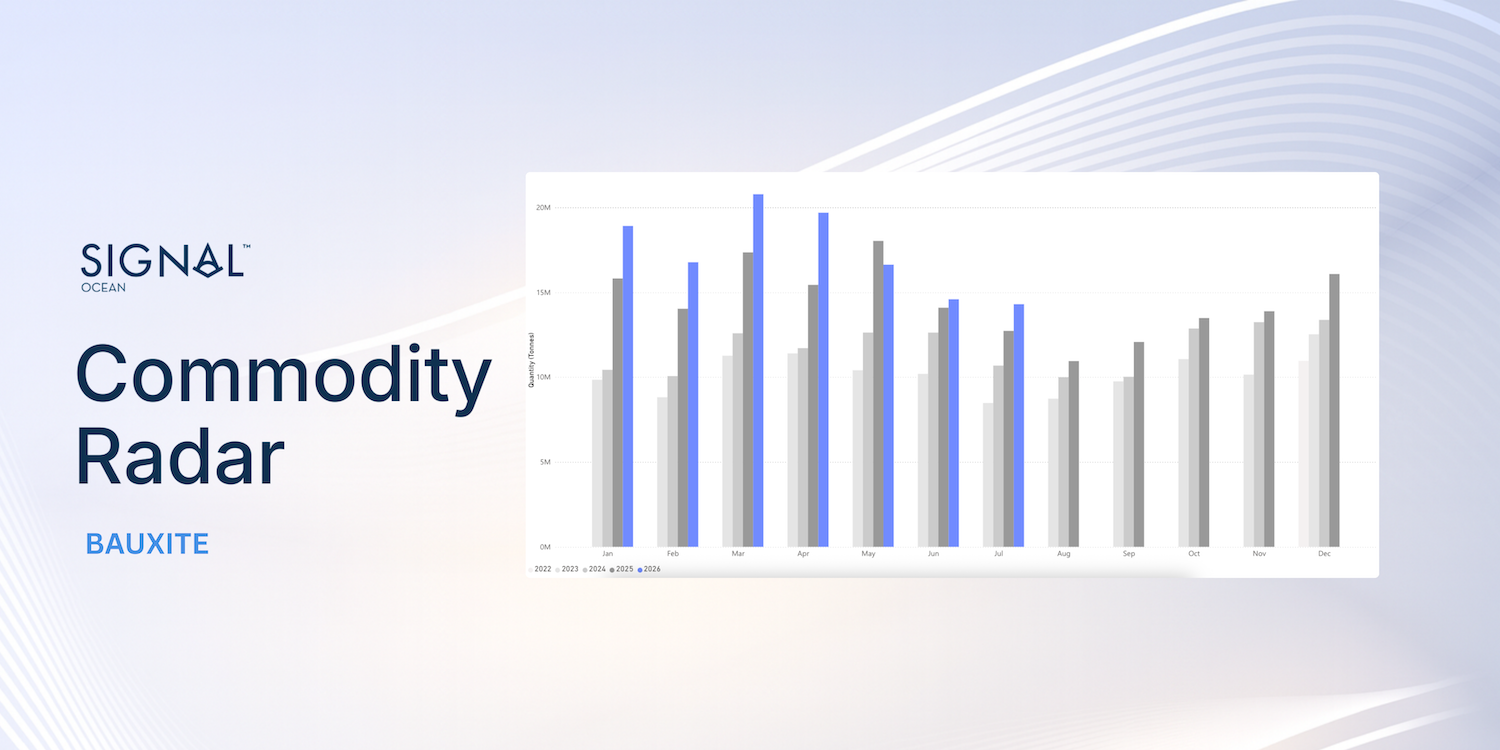
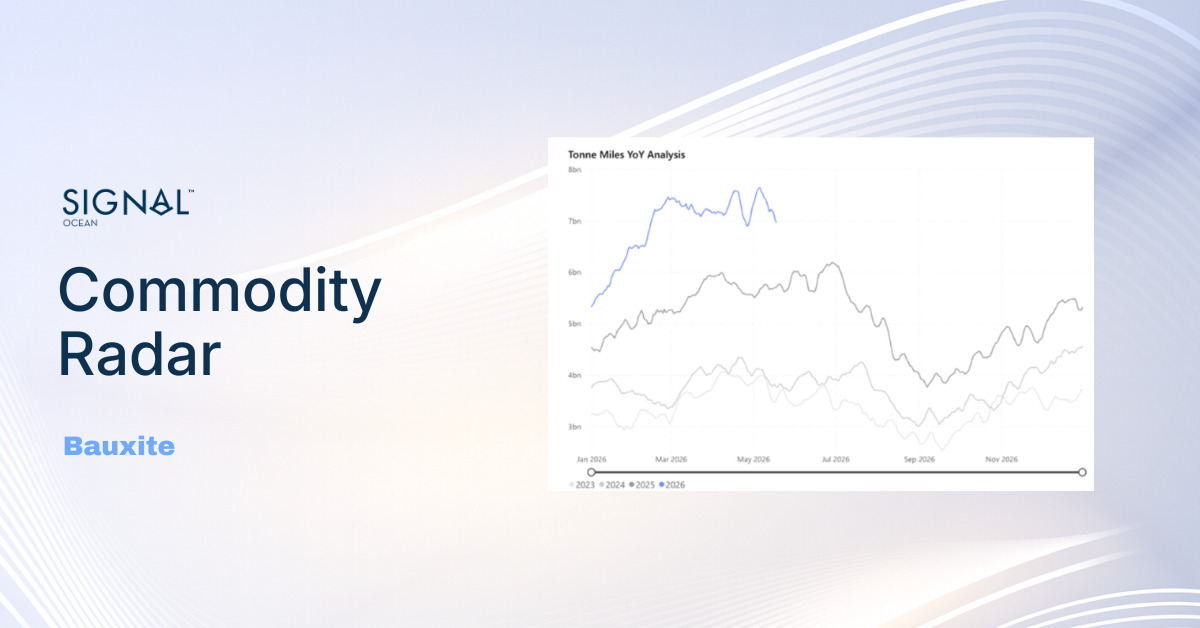
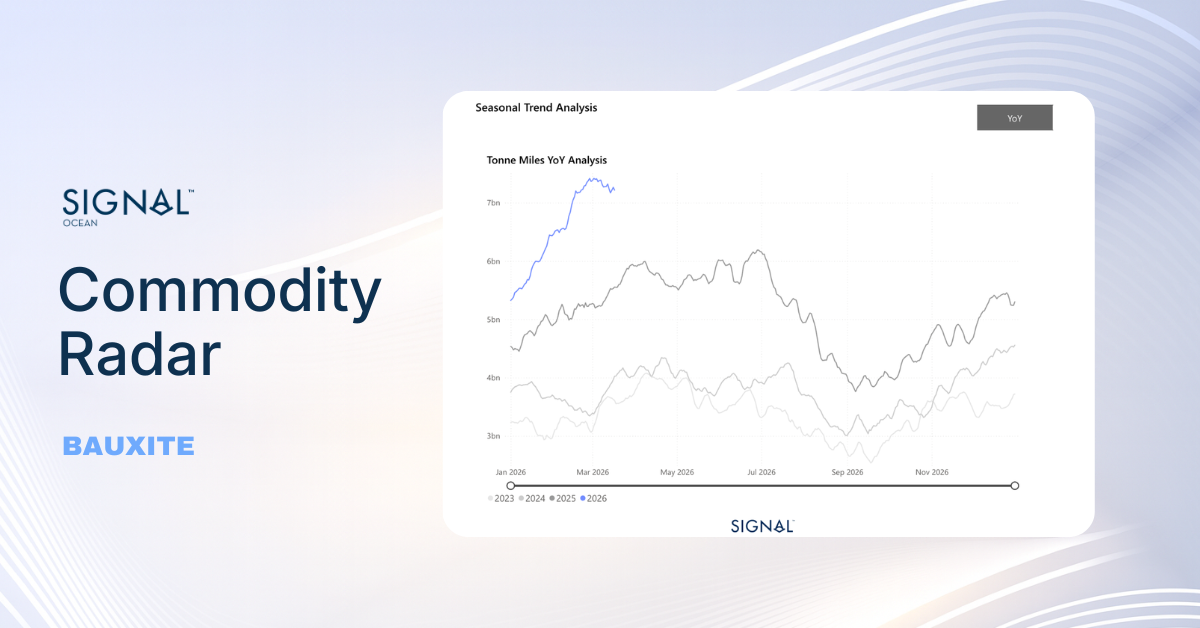
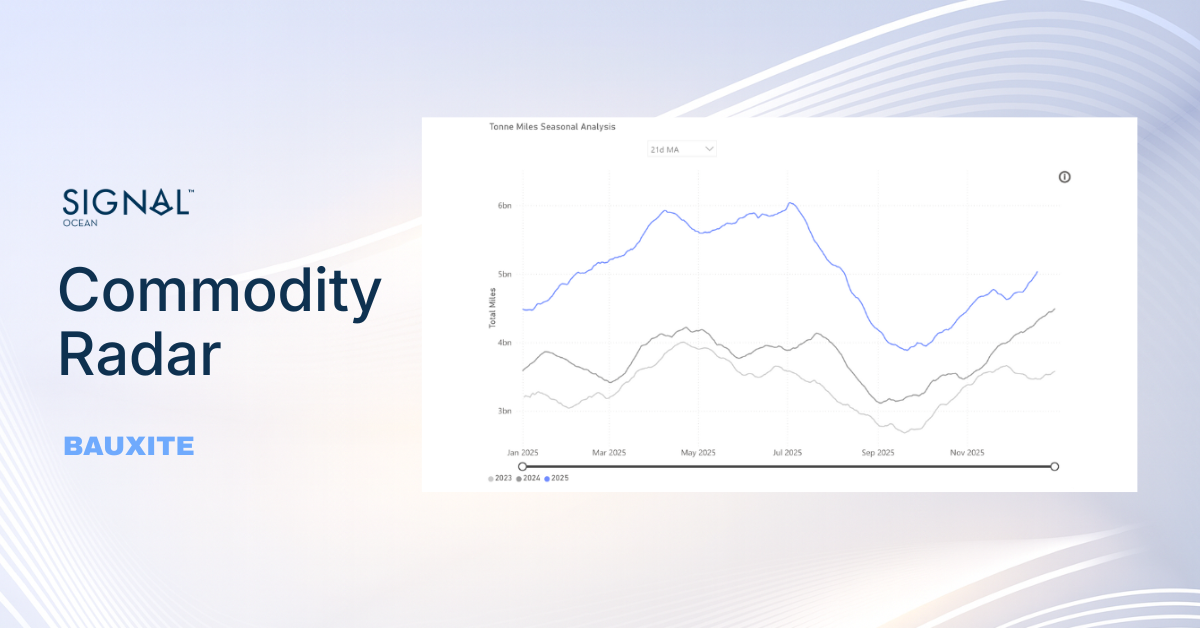
Global seaborne bauxite flows rose 2% to reach 68.4mt in 2026 Q2
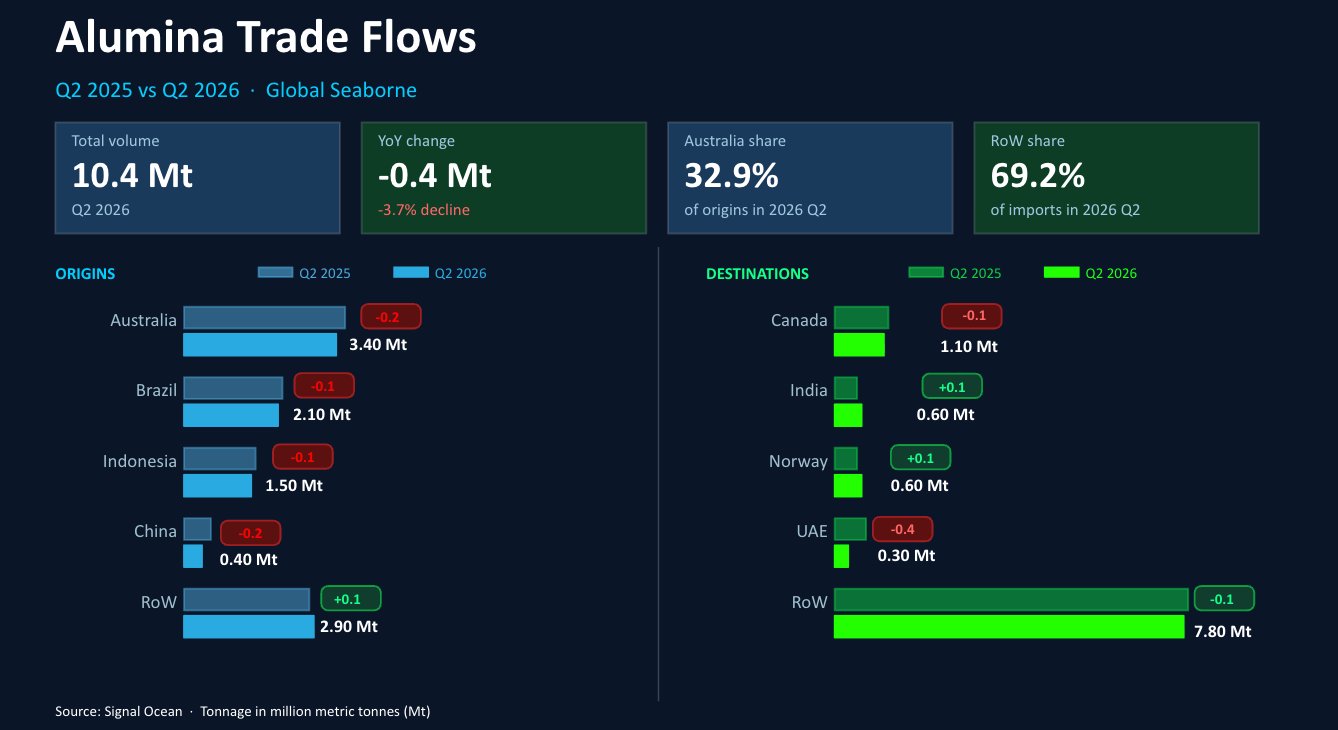
Global seaborne alumina flows fell by almost 4% to 9.5mt in 2026 Q2
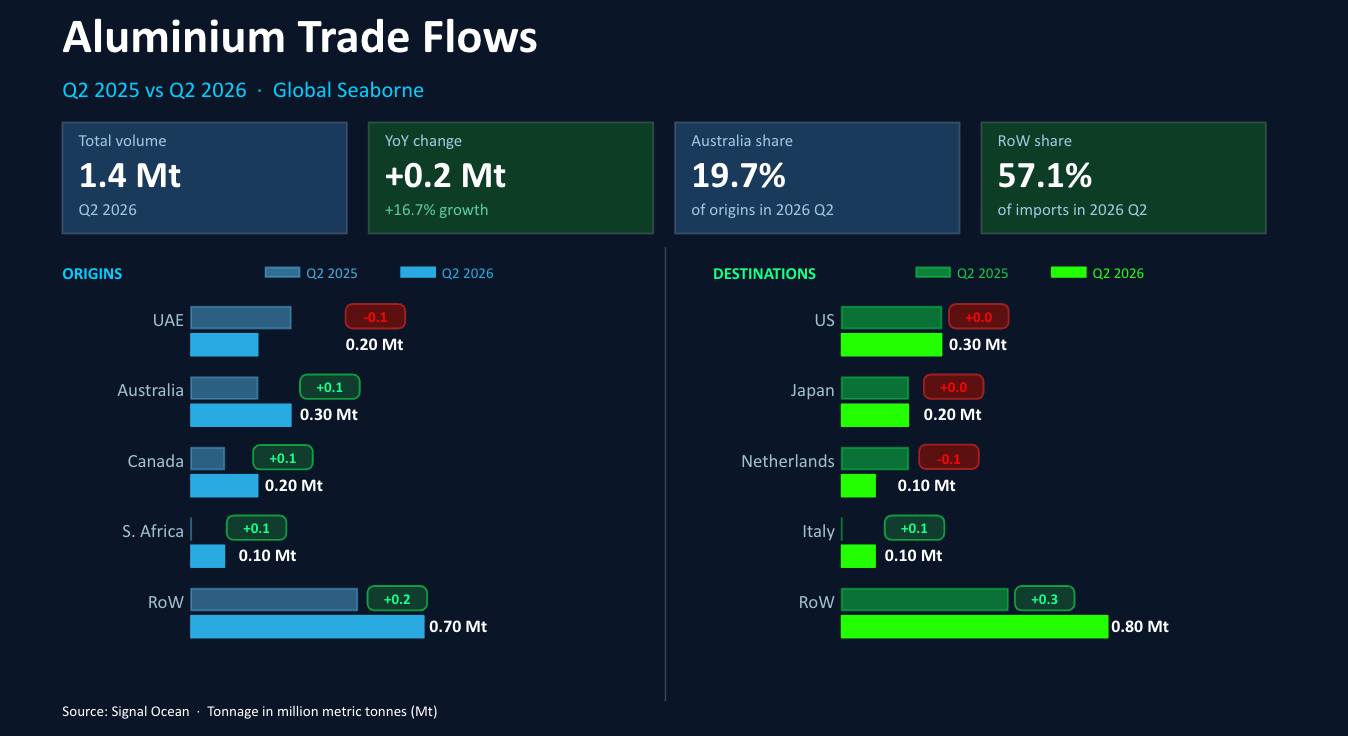
Global seaborne aluminium flows grew by over 16% to 1.4mt in 2026 Q2
Global seaborne bauxite
Global seaborne bulk bauxite flows rose by 2% to reach 68.4mt in 2026 Q2. Of the two largest exporters, only Guinea saw exports increase, but this was more than enough to offset losses of exports from Australia. China and India both saw imports increase, whilst the UAE saw imports fall as major ports became inaccessible due to the conflict in the wider Gulf region.
Source: Seaborne bauxite flows origins and destinations from Signal Ocean
Global seaborne alumina
Global seaborne bulk alumina trade declined by close to 4% to 10.4Mt in Q2 2026, primarily due to the closure of the Strait of Hormuz, which disrupted access for key alumina-importing nations. The loss of these buyers weighed on global trade, leading to reduced exports from several major alumina-producing countries. If the conflict continues to re-escalate, the alumina trade is likely to remain disrupted, particularly on routes through the Gulf. Over the medium term, however, Indonesia's expanding aluminium smelting capacity is expected to support stronger regional alumina demand and reshape global trade flows
Source: Seaborne aluminal flows origins and destinations from Signal Ocean
Global seaborne aluminium
Global seaborne bulk aluminium flows increased by 17% to reach 1.4mt in 2026 Q2. Three of the four largest export countries saw growth; the exception was the UAE, which experienced a decline of 4%, a result of disruption in the Strait of Hormuz.
The United States saw similar levels of seaborne bulk aluminium imports in 2026 Q2 as it did in 2025 Q2. This was despite an increased tariff on aluminium imports from 24% to 50% introduced in June 2025.
Source: Seaborne aluminium flows, origins, and destinations from Signal Ocean
Explore the data yourself: All flow figures in this report are drawn from The Signal Ocean Platform, where you can filter by commodity, route, and date range to track the aluminium chain in real time. Get in touch for a walkthrough of our dry bulk flows module.
Luke has over 8-years of experience analysing and forecasting commodity markets, with particular expertise in stainless steel raw materials and the wider metals markets.
Creating a sustainable world requires us to embark on a journey towards a zero emission future, where every step is a commitment to preserve our planet for future generations.
Albert Greenway
Environmental Scientist, Sustainability Expert
No items found.
Increased Use of Renewable Energy:
Shipping companies are embracing renewable energy sources to power onboard systems and reduce emissions during port operations. Solar panels and wind turbines are being installed on vessels to generate clean energy, reducing reliance on auxiliary engines, and cutting down emissions. Shore power facilities in ports allow ships to connect to the electrical grid, eliminating the need for onboard generators while docked.
Collaboration and Industry Partnerships:
Recognizing that addressing emissions requires collective action, shipping companies, governments, and organizations have formed partnerships and collaborations. These initiatives focus on research and development, sharing best practices, and promoting knowledge transfer. Joint projects aim to develop and deploy innovative technologies, improve infrastructure, and create a supportive regulatory framework to accelerate the industry's transition towards a greener future. The Zero Emission Shipping - Mission Innovation.
To pave the way for a greener future in shipping, the availability of alternative fuels plays a vital role in their widespread adoption. However, this availability is influenced by factors such as port infrastructure, local regulations, and government policies. As the demand for cleaner fuels in shipping rises and environmental regulations become more stringent, efforts are underway to improve the accessibility of these fuels through infrastructure development, collaborations, and investments in production facilities.
Liquefied Natural Gas (LNG) infrastructure has seen significant growth in recent years, resulting in more LNG bunkering facilities and LNG-powered vessels. Nonetheless, the availability of LNG as a marine fuel can still vary depending on the region. To ensure consistent availability worldwide, there is a need for further development of LNG supply chains and infrastructure. For biofuels, their availability hinges on production capacity and the availability of feedstock. Although biofuels are being produced and utilized in various sectors, their availability as a marine fuel remains limited. Scaling up biofuel production and establishing robust supply chains are imperative to ensure wider availability within the shipping industry.Hydrogen, as a fuel for maritime applications, is still in the early stages of infrastructure development. While some hydrogen vessels have been tested or introduced in the first quarter of last year, the infrastructure required for hydrogen production and distribution needs further advancement.
Ammonia, as a marine fuel, currently faces limitations in availability. The production, storage, and handling infrastructure for ammonia need further development to support its widespread use in the shipping industry.Methanol, on the other hand, is already a commercially available fuel and has been used as a blend with conventional fuels in some ships. However, its availability as a standalone marine fuel can still be limited in certain regions. Bureau Veritas in October 2022 published a White Paper for the Alternative Fuels Outlook. This white paper provides a comprehensive overview of alternative fuels for the shipping industry, taking into account key factors such as technological maturity, availability, safety, emissions, and regulations.
Creating a sustainable world requires us to embark on a journey towards a zero emission future, where every step is a commitment to preserve our planet for future generations.
Albert Greenway
Environmental Scientist, Sustainability Expert
Increased Use of Renewable Energy:
Shipping companies are embracing renewable energy sources to power onboard systems and reduce emissions during port operations. Solar panels and wind turbines are being installed on vessels to generate clean energy, reducing reliance on auxiliary engines, and cutting down emissions. Shore power facilities in ports allow ships to connect to the electrical grid, eliminating the need for onboard generators while docked.
Collaboration and Industry Partnerships:
Recognizing that addressing emissions requires collective action, shipping companies, governments, and organizations have formed partnerships and collaborations. These initiatives focus on research and development, sharing best practices, and promoting knowledge transfer. Joint projects aim to develop and deploy innovative technologies, improve infrastructure, and create a supportive regulatory framework to accelerate the industry's transition towards a greener future. The Zero Emission Shipping - Mission Innovation.
To pave the way for a greener future in shipping, the availability of alternative fuels plays a vital role in their widespread adoption. However, this availability is influenced by factors such as port infrastructure, local regulations, and government policies. As the demand for cleaner fuels in shipping rises and environmental regulations become more stringent, efforts are underway to improve the accessibility of these fuels through infrastructure development, collaborations, and investments in production facilities.
Liquefied Natural Gas (LNG) infrastructure has seen significant growth in recent years, resulting in more LNG bunkering facilities and LNG-powered vessels. Nonetheless, the availability of LNG as a marine fuel can still vary depending on the region. To ensure consistent availability worldwide, there is a need for further development of LNG supply chains and infrastructure. For biofuels, their availability hinges on production capacity and the availability of feedstock. Although biofuels are being produced and utilized in various sectors, their availability as a marine fuel remains limited. Scaling up biofuel production and establishing robust supply chains are imperative to ensure wider availability within the shipping industry.Hydrogen, as a fuel for maritime applications, is still in the early stages of infrastructure development. While some hydrogen vessels have been tested or introduced in the first quarter of last year, the infrastructure required for hydrogen production and distribution needs further advancement.
Ammonia, as a marine fuel, currently faces limitations in availability. The production, storage, and handling infrastructure for ammonia need further development to support its widespread use in the shipping industry.Methanol, on the other hand, is already a commercially available fuel and has been used as a blend with conventional fuels in some ships. However, its availability as a standalone marine fuel can still be limited in certain regions. Bureau Veritas in October 2022 published a White Paper for the Alternative Fuels Outlook. This white paper provides a comprehensive overview of alternative fuels for the shipping industry, taking into account key factors such as technological maturity, availability, safety, emissions, and regulations.

.webp)





.png)

.png)










.png)






.png)
.png)


.png)